
Technical note · ballroom
Ballroom sound checklist: meeting mode vs banquet mode
A ballroom is a room with two jobs. In the morning it may host a conference with a lectern and a panel; in the evening the tables are reset for a banquet and the dance floor needs music. The sound system has to switch without rebuilding the room.
This checklist covers the decisions that make the switch work: coverage, presets, subwoofers, wireless RF and the checks before the first event.
How does the ballroom change use?
Start with the operating modes, not the equipment. List the layouts: theatre, classroom, banquet, exhibition and dance floor. For each mode, mark the stage, the head table, the dance floor and the service routes.
The loudspeaker layout must cover the important seats in every mode. A line array aimed for the banquet floor may not cover the stage in a theatre layout; a distributed system may be better for a flat divisible room.
Room modes
| Mode | Primary need | Coverage target |
|---|---|---|
| Conference | Speech at the stage and the seats | Every seat, low level |
| Banquet | Speech at the head table, music on the floor | Head table and dance floor |
| Exhibition | Announcements over ambient noise | Even coverage, high level |
| Dance | Music with low-frequency impact | Dance floor and surrounding tables |
What are the targets for meeting and banquet modes?
Speech mode needs intelligibility and controlled level. Music mode needs low-frequency headroom and a wider level range. Trying to solve both with one preset produces a room that is either harsh for speech or thin for music.
Define the target for each mode: speech level at the last table, music level on the dance floor, and the maximum level at the property boundary. The presets should be named and locked.
How should the array cover the room?
For a large ballroom, a line array or a point-source array can cover the depth; for a low, wide room, distributed loudspeakers may be more even. The choice depends on the ceiling height, the room depth and the sight lines.
Aim the array at the seating, not at the back wall. Use delay speakers for a deep room and keep the front rows out of the pattern if the array is flown close to the stage.
Do you need subwoofers for banquet music?
A banquet with music needs low-frequency support that a speech system does not. Add subwoofers with the correct crossover and a preset that can be bypassed for speech-only events.
Place the subwoofers to avoid a strong power-alley effect at the head table. In a divisible room, check the low-frequency behaviour with the partitions open and closed.
How do you plan wireless and RF?
Wireless microphones fail for one of three reasons: a weak RF path, a crowded frequency band or a battery that was not checked. Plan the antenna position, the receiver location and the spare batteries before the event.
For a hotel with multiple ballrooms, coordinate frequencies across the building. A scan on the day of the event is not a substitute for a frequency plan.
What stage monitoring does the event need?
The presenter needs to hear the room, and the band needs to hear itself. Add stage monitors or in-ear monitoring for music events, and a separate foldback path for the conference mode.
Keep the monitor level independent of the main system. A monitor that follows the main volume will feedback or disappear at the wrong moment.
What should be checked at commissioning?
Commission the ballroom in both modes. Measure speech at the last table, music on the dance floor, RF coverage at the stage and the battery status of every wireless channel.
Event checklist
| Check | Method | Record |
|---|---|---|
| Speech | Measure at the last table | Target and measured value |
| Music | Measure on the dance floor | Level and preset |
| RF | Walk the stage and the back of the room | Channel and signal |
| Preset | Switch between meeting and banquet | Result and restore time |
| Power | Test the backup and restart sequence | Result |
What should you send for a quotation?
Send the room dimensions, ceiling height, maximum table count, stage position, dance-floor location and the types of events. Add the existing PA or ballroom system if the project is a retrofit.
With those inputs we can return a coverage concept, a loudspeaker and subwoofer count, a wireless plan and a preset list. The final model list follows the events, not the catalogue.
A ballroom is designed for change: two modes, one system, presets that any operator can recall. If the room cannot switch from speech to banquet without a technician, the design is not finished.
Related products
Product families related to this note
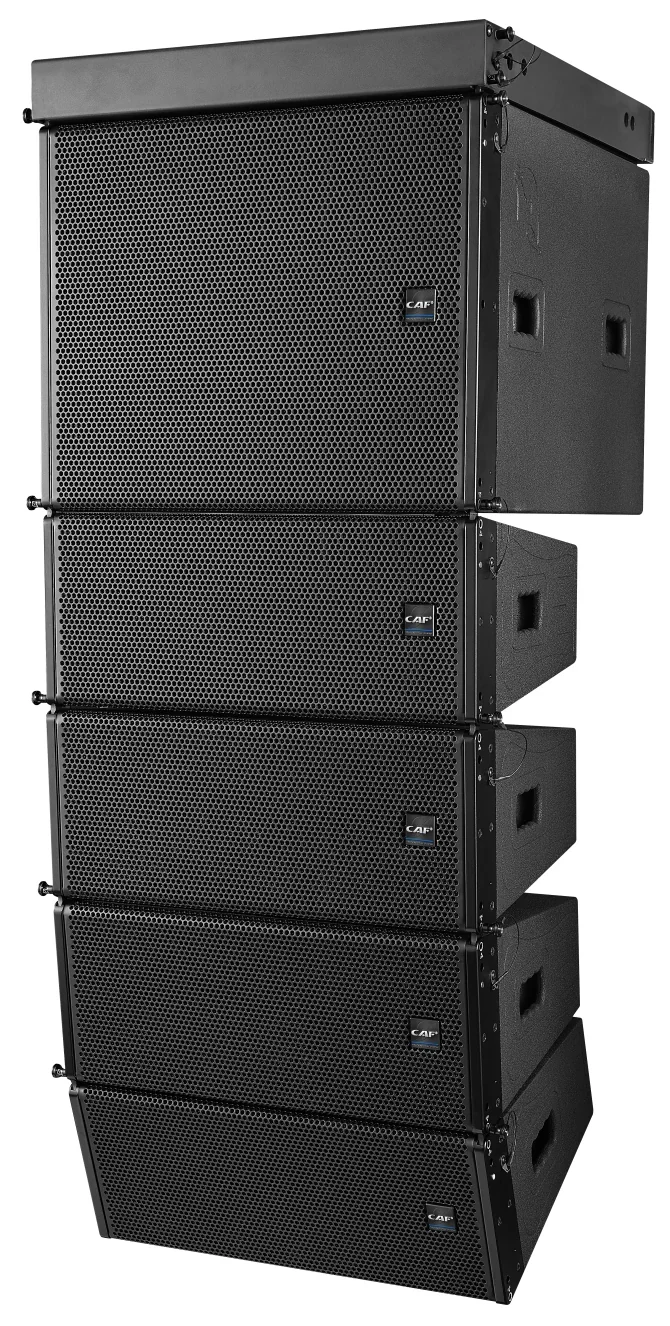 Ballroom line · reinforcement
Ballroom & stage sound
Line arrays, point-source loudspeakers, subwoofers, stage monitors and amplifiers for hotel ballrooms, convention halls and event venues.
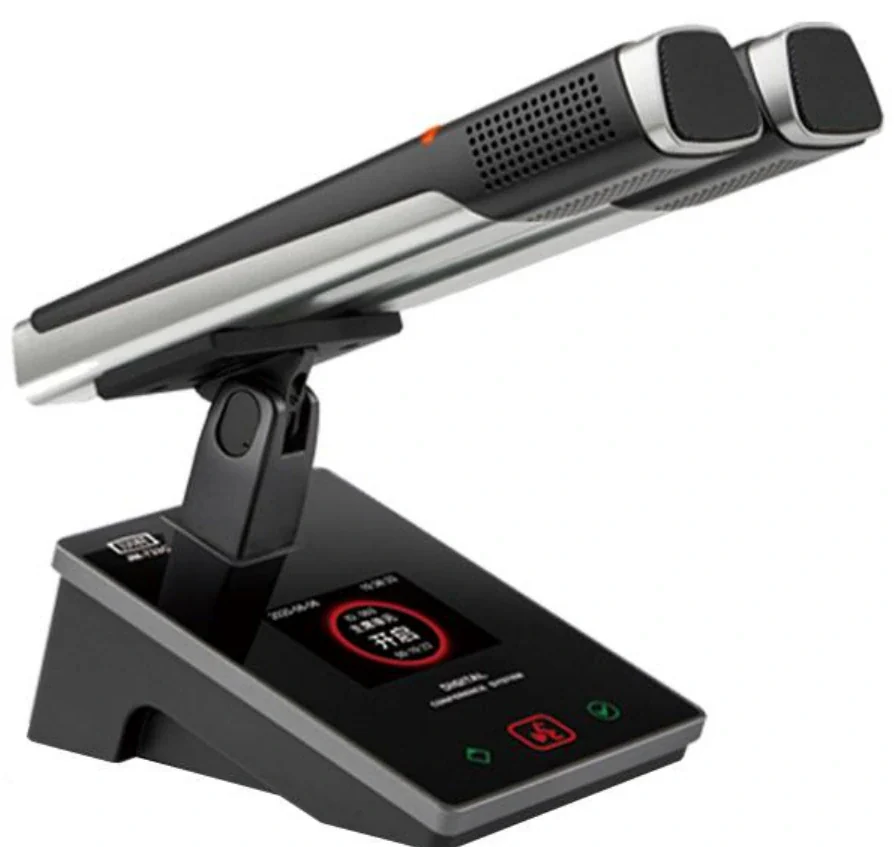 Ballroom line · stage
Wireless microphones & stage lighting
Handheld, lavalier and headset wireless systems, antenna distribution, stage lighting and control for ballrooms, event venues and multi-purpose halls.
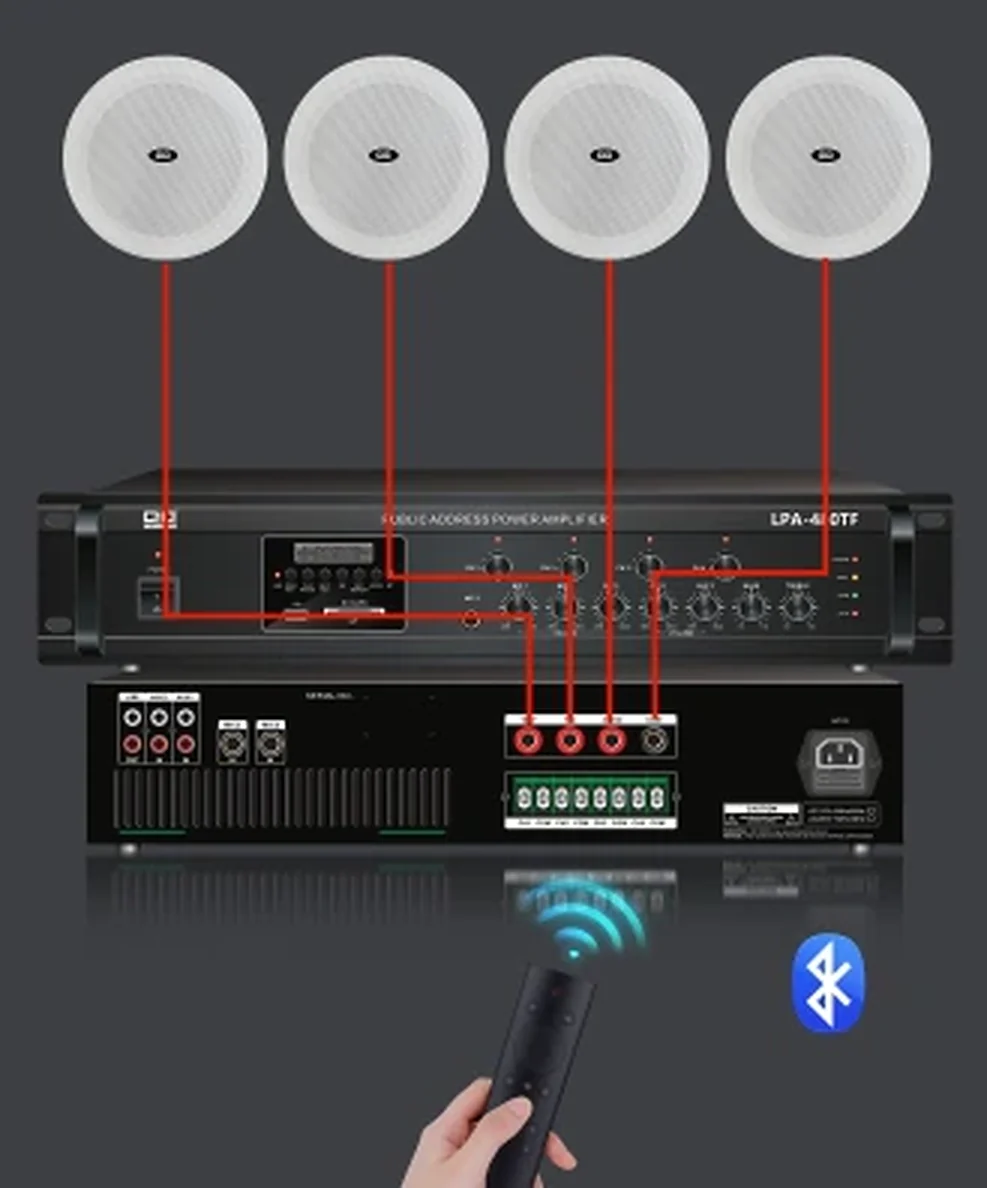 PA line · everyday
Background music systems
Music sources, players, zone volume control and loudspeaker selection for hotels, retail, restaurants, offices and public areas — with the paging and fire override designed in from the start.
Frequently asked questions
Frequently asked questions
Can one sound system handle both meetings and banquets?
Do I need a line array for a ballroom?
How many wireless microphones does a ballroom need?
Why does the system sound different when the tables are set?
What is a power alley in a ballroom?
What should a ballroom AV quotation include?
Related pages