
Application design · worship
Churches & worship halls PA system
Speech and music in a reverberant, often heritage, room — with the architecture respected.
Reference application image. Client names are withheld; the equipment schedule is confirmed per project.
Intelligibility: Speech first · Reverberation: Room-limited · Heritage: Surface-mounted
The design brief
What the space has to do
A church is usually a stone or timber room with a long reverberation time and a strong architectural character. The audio system has to make speech intelligible and music natural without covering the walls with loudspeakers or turning the room into a nightclub.
The design favours directional column loudspeakers placed close to the listeners, delay for the rear, and a modest subwoofer only if the music programme needs it. The microphone layout follows the liturgy: altar, lectern, choir and a roaming microphone. The system is operated by volunteers, so the presets have to be simple.
Design checks
| Parameter | Value | Note |
|---|---|---|
| Intelligibility | Speech first | directionality before power |
| Reverberation | Room-limited | acoustic treatment where possible |
| Heritage | Surface-mounted | minimal fixing into historic fabric |
| Operation | Presets | volunteer-friendly control |
Interface & responsibility
What has to be agreed before installation
The acoustic design is only half the job. These interfaces decide whether the system can be installed, tested and accepted.
| Interface | Typical arrangement | Who provides | Confirm |
|---|---|---|---|
| Fire alarm interface | Hard-wired trigger per zone or group | Fire contractor / SONTRA interface design | Cause-and-effect matrix |
| Paging console | Desktop console or IP paging station | SONTRA supply / local installer | Zone access and priority |
| Network / IT | Dedicated VLAN, QoS, multicast | Client IT / integrator | Network sign-off |
| Loudspeaker circuits | 100V line per zone / riser | Local contractor / SONTRA schedule | Impedance and tap test |
What usually goes wrong
Three physical problems, not three products
Long reverberation
Stone and glass smear speech. Directional loudspeakers and shorter throw distances are more effective than power.
Heritage constraints
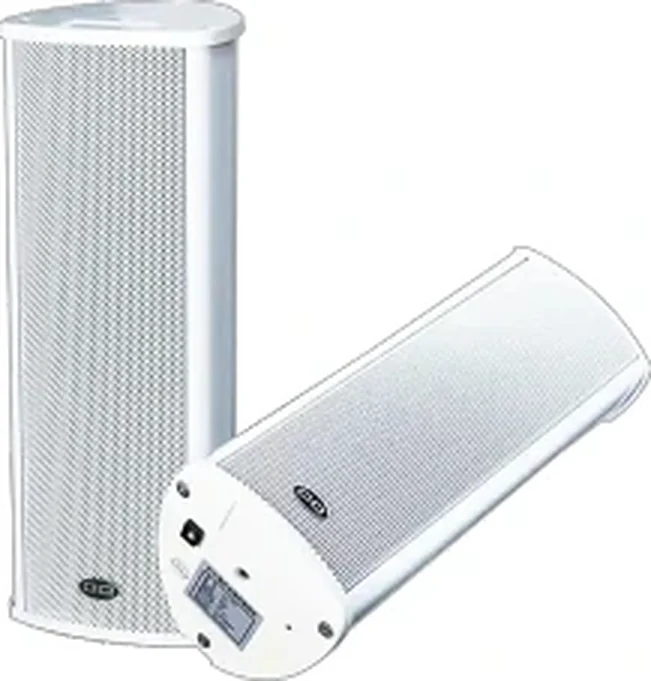
Cable routes and mounting points are restricted. Surface-mounted columns and discreet wall loudspeakers are often the only option.
Speech and music
The same system has to serve a sermon and a choir. The presets and the loudspeaker layout have to support both.
The design response
What we change in the system
Column loudspeakers
Columns close to the seating area improve direct sound and reduce the energy that excites the reverberation.
Delay for the rear
A delay loudspeaker or a second column at the rear keeps the image at the altar and the level even.
Liturgical microphone layout
Altar, lectern, choir and a roaming microphone are separate inputs with their own gain and mute.
Volunteer-friendly presets
Speech, music and event presets. The volunteer selects a mode, not a parameter.
Zone schedule
A starting point for the zoning
The final zone list follows the building’s operation and fire compartments. This is the typical structure.
| Zone | Need | Typical kit |
|---|---|---|
| Nave | Speech intelligibility | Column loudspeakers, delay |
| Chancel and altar | Microphones and monitors | Gooseneck / lavalier, stage monitor |
| Choir | Choir microphones and music | Choir microphones, music preset |
| Entrance and hall | Paging and overflow audio | Wall or ceiling loudspeakers |
Equipment families
The blocks used in this design
These are the families that usually make up the system. The final model list follows the zone schedule and the certification route.
PA line · outputCeiling, horn, column & wall loudspeakers
Ceiling, horn, column, wall and landscape loudspeakers for corridors, halls, factories, stations and outdoor areas — selected by coverage and environment, not by wattage alone.
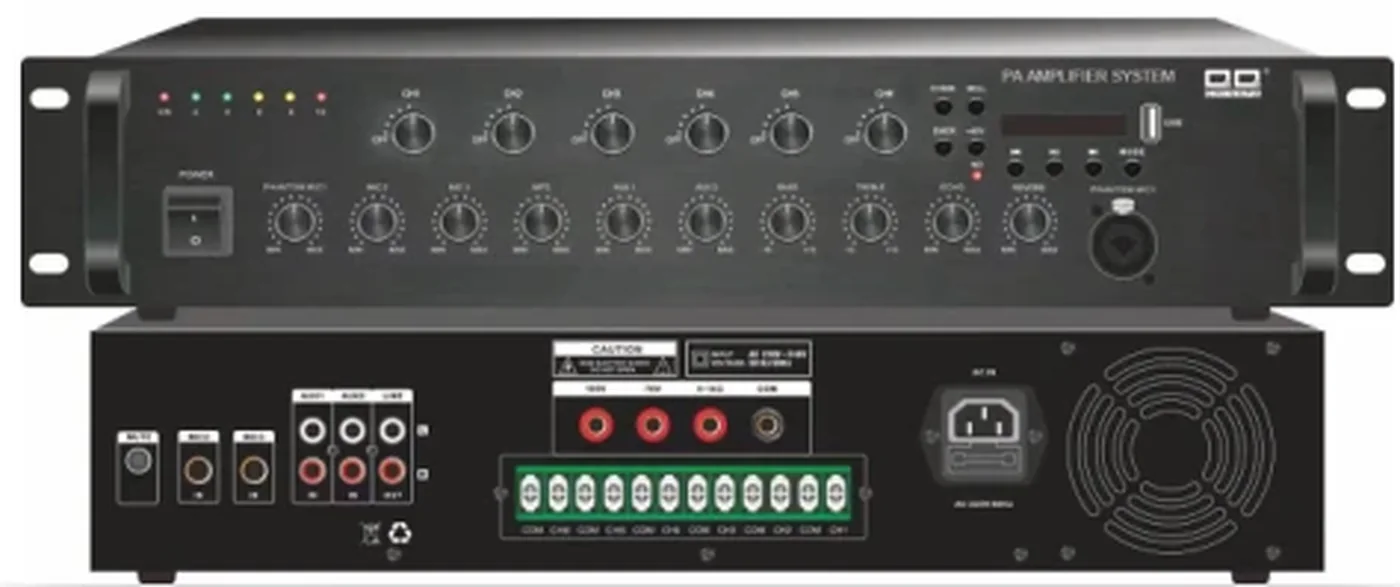 PA line · core
Broadcast control & amplifiers
Broadcast hosts, zone controllers, mixer amplifiers and IP amplifiers for background music, paging and emergency override — specified as one signal chain.
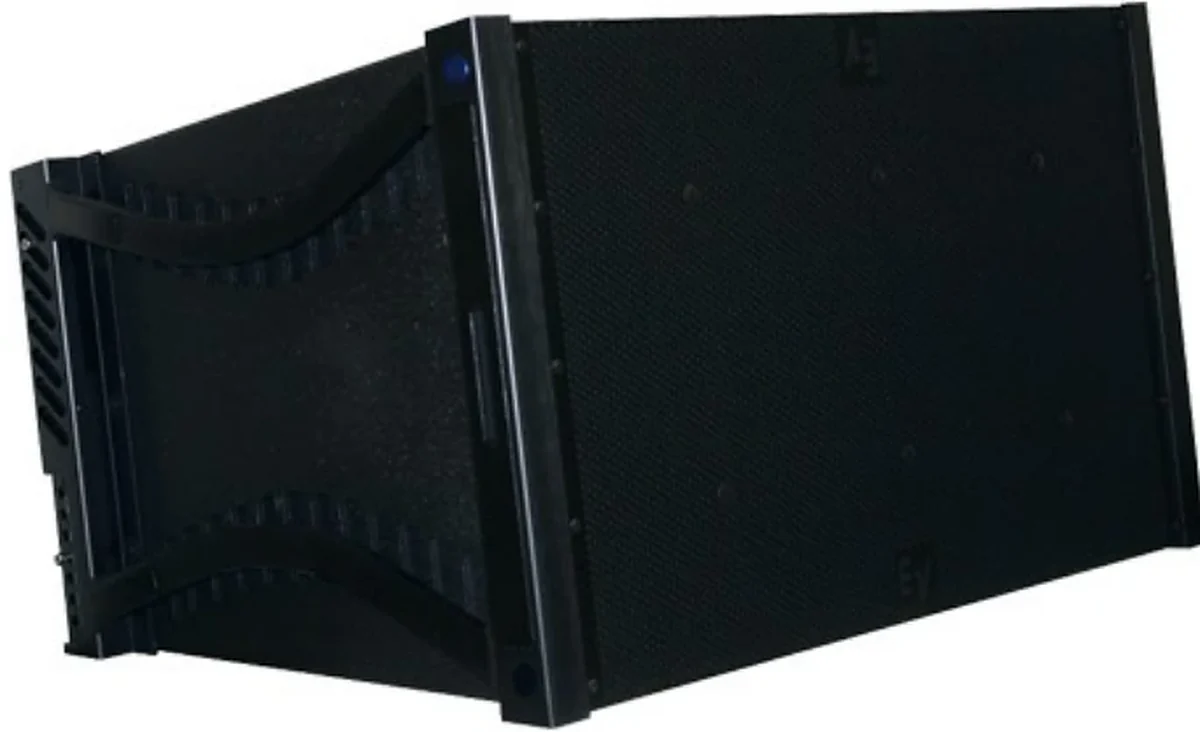 Conference line · reinforcement
Conference room sound reinforcement
Ceiling, wall and line-array loudspeakers, amplifiers and audio processing for meeting rooms, boardrooms, lecture theatres and multi-purpose halls.
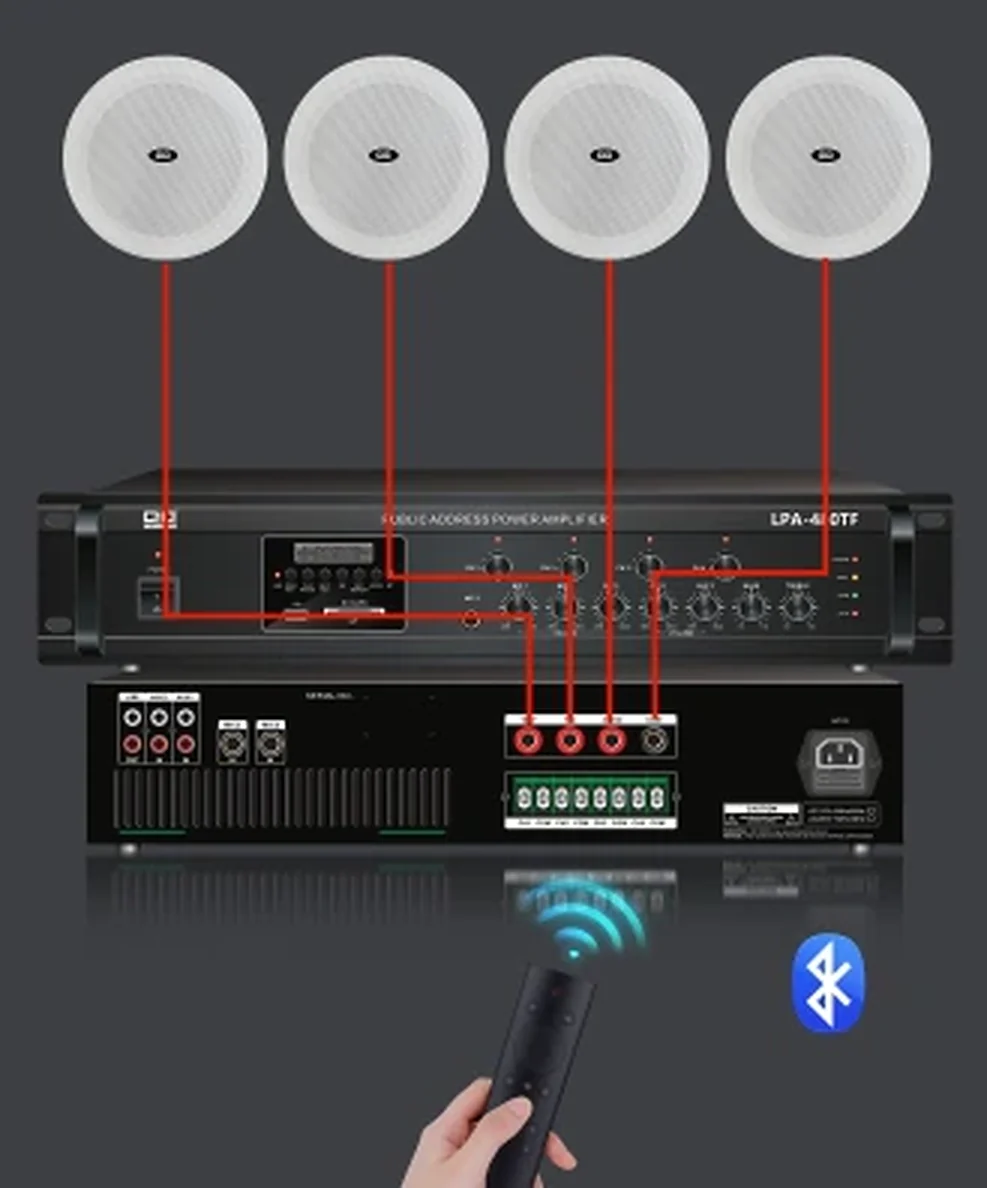 PA line · everyday
Background music systems
Music sources, players, zone volume control and loudspeaker selection for hotels, retail, restaurants, offices and public areas — with the paging and fire override designed in from the start.
Related applications
Adjacent spaces, different rules
Mosques & prayer halls
Speech that reaches the prayer hall and the courtyard without echoes, feedback or late-night neighbour complaints.
View application design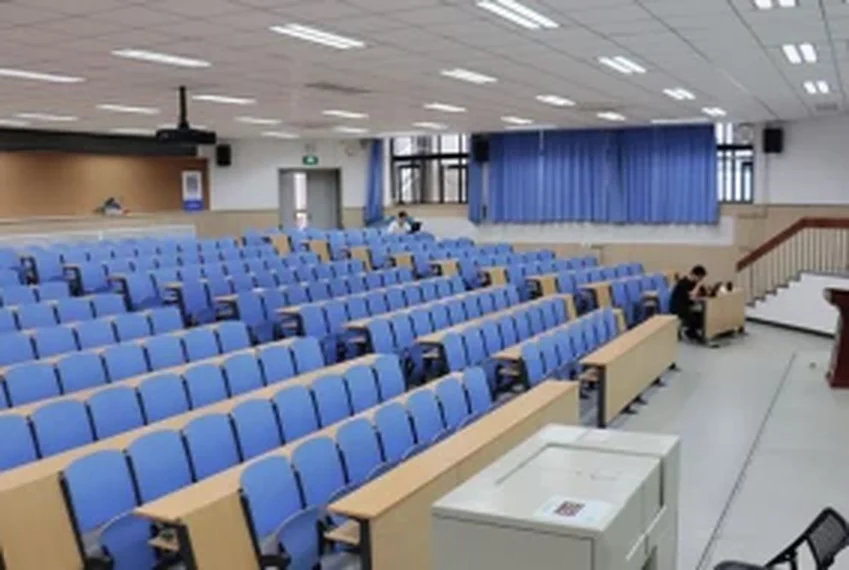
Lecture halls & auditoriums
One presenter, hundreds of listeners and a room where the back row must hear every word.
View application design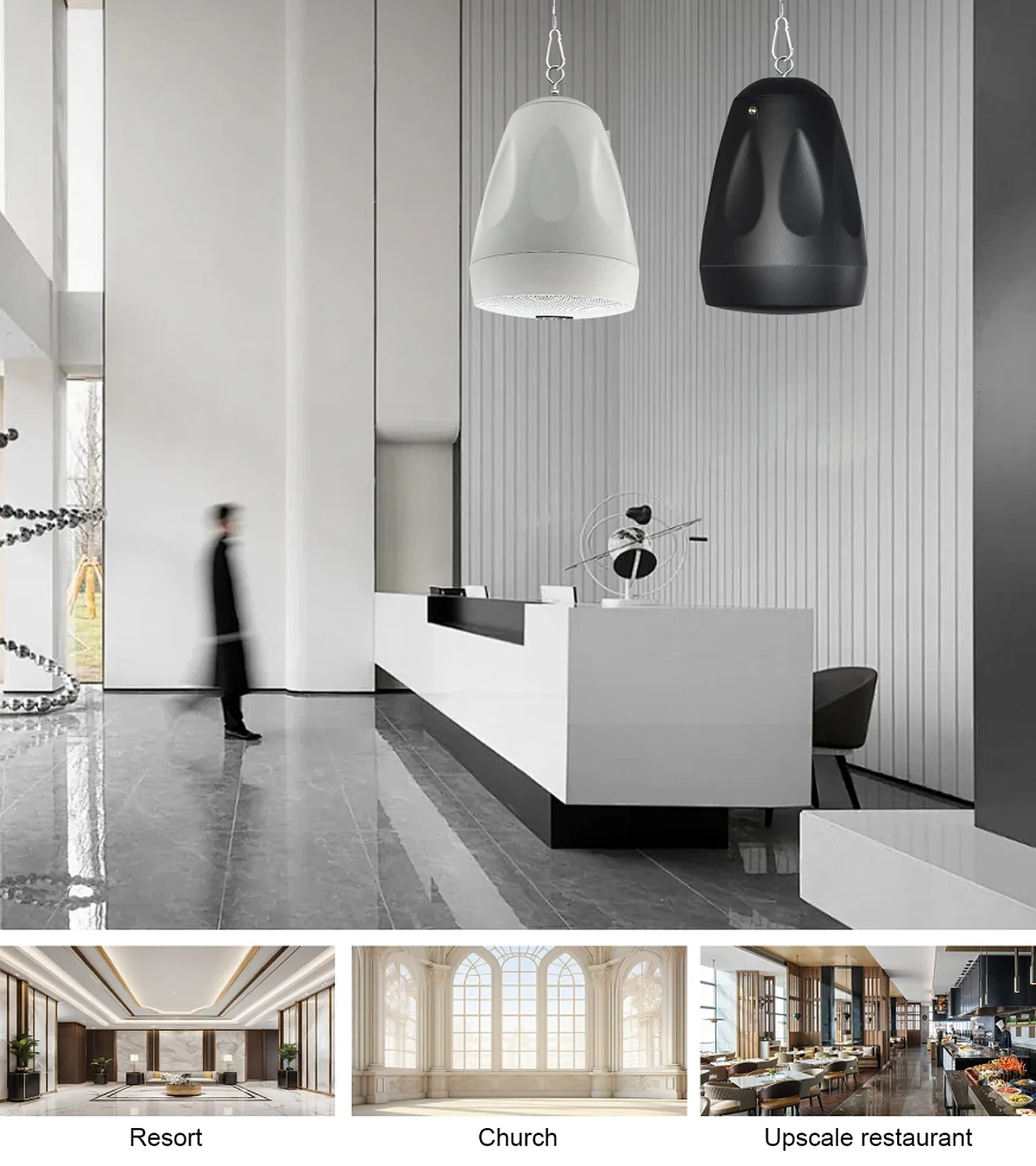
Existing building retrofit
New paging and evacuation in a building that cannot be opened up, closed down or filled with new cable.
View application designQuestions
Frequently asked questions
The questions that usually decide the scope: loudspeaker count, amplifier size, fire interface, certification and who installs the system. If your question is not here, send it with the building data.
Ask an application engineerCan we improve speech without acoustic treatment?
Yes, to a point. Directional loudspeakers, delay and careful microphone placement can improve intelligibility in a reverberant room. If the reverberation is very long, acoustic treatment or a more distributed loudspeaker approach may be necessary. We assess the room before recommending equipment.
What loudspeakers suit a heritage church?
Surface-mounted column or discreet wall loudspeakers are usually the least invasive. They avoid ceiling work and can be colour-matched. The mounting must not damage historic fabric.
Can the system handle both speech and choir?
Yes, with separate presets and a loudspeaker layout that supports both. Speech needs intelligibility; music needs a fuller low-frequency response. The two presets are tuned during commissioning.
Can volunteers operate the system?
Yes. The control interface is reduced to a few presets and a master level. Advanced controls are behind a technician code. A written operating procedure and a short training session are part of the handover.
Next step
Send the room data once
A sketch, a room schedule or a drawing link is enough to start. This application can be supplied as a complete package: own-factory equipment, full system configuration and one combined proposal covering the adjacent rooms or systems.
- Room sizes, ceiling height and finishes
- Seat, table or zone count
- Fire interface and applicable standard
- Any ODM / OEM or private-label requirement
Project inquiry
Discuss Churches & worship halls
Send the room or building data once. We return one combined proposal covering PA, conference, ballroom and AV, with the equipment schedule, interface list and the questions that still need an answer. ODM and OEM inquiries are welcome. Drawings are welcome but not required.