
PA line · output
PA loudspeakers: ceiling, horn, column & wall
Ceiling, horn, column, wall and landscape loudspeakers for corridors, halls, factories, stations and outdoor areas — selected by coverage and environment, not by wattage alone.
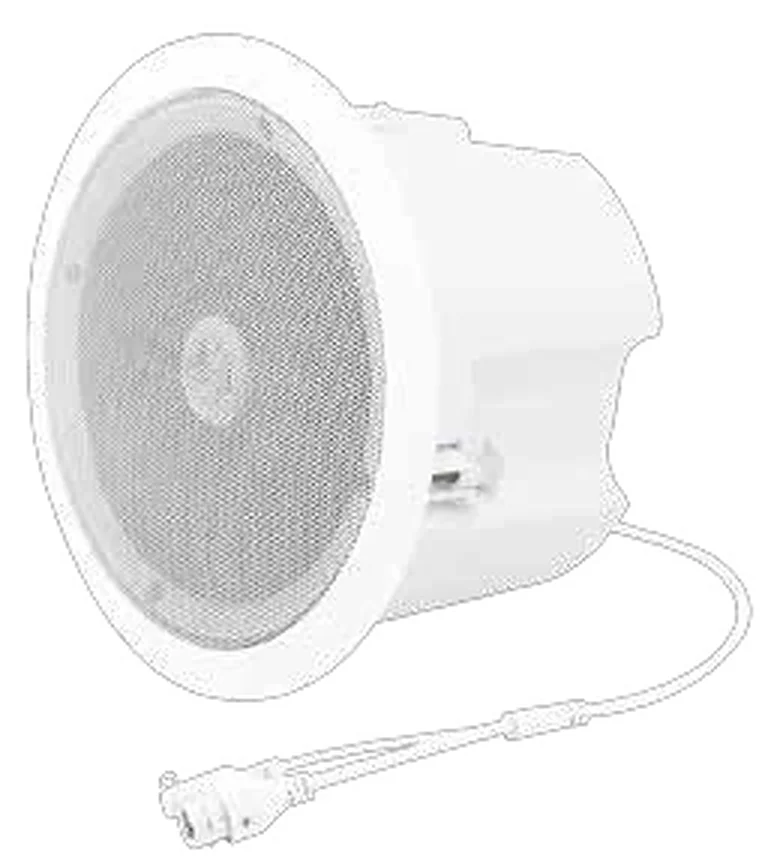
Representative image. Final finish and configuration are confirmed with the quotation.
Key values: 3W / 6W · ≤15 m · 100V · Indoor / outdoor
100V line guide: taps, cable and voltage drop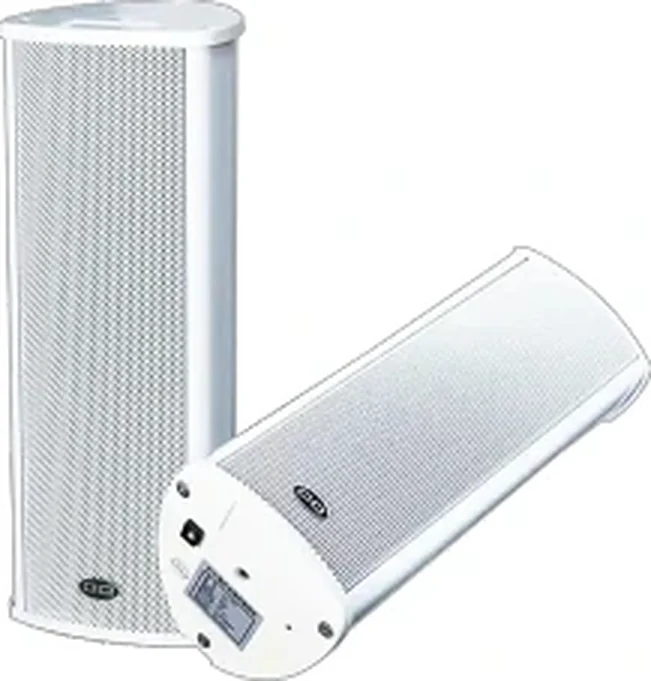
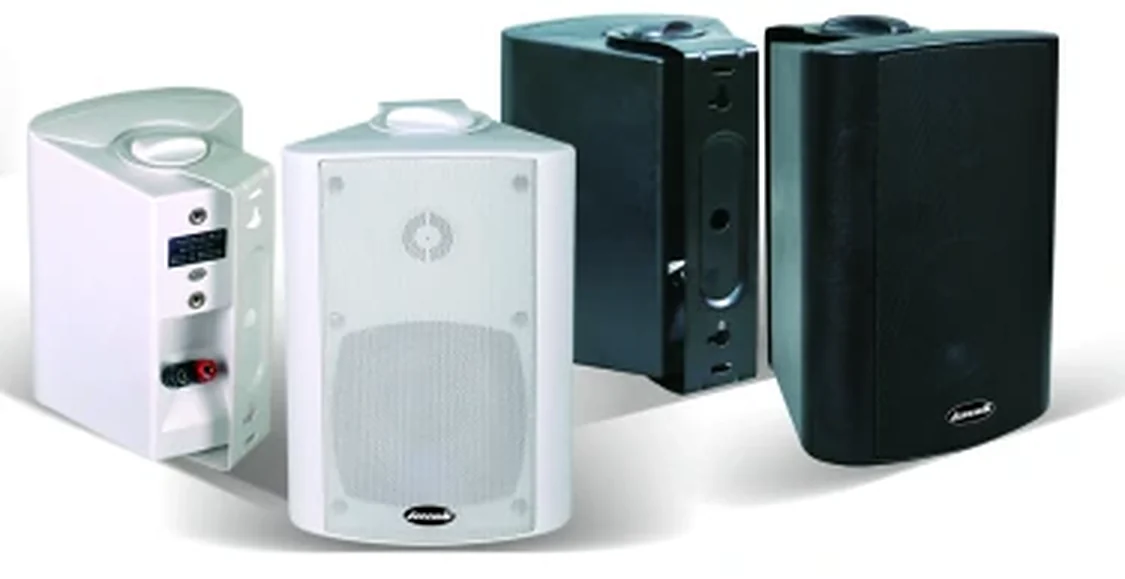
Reference hardware · final finish and tap setting confirmed with the quotation
Overview
The part of the system the occupant actually hears.
Loudspeaker selection is a coverage problem before it is a wattage problem. A ceiling speaker in a 2.8 m corridor, a horn in a 9 m factory bay and a column in a reverberant station hall are solving three different physical problems. The tap wattage is set after the coverage pattern is chosen.
The reference public-address design for a mixed-use tower used 3 W ceiling loudspeakers in rooms and corridors, 6 W wall loudspeakers in car parks and service areas, 6 W wall loudspeakers in staircases and 30 W landscape speakers outdoors. The quantities were driven by two rules: no point in a fire compartment should be more than 15 m from the nearest loudspeaker, and the last loudspeaker in a corridor should be no more than 8 m from the corridor end.
The same logic applies to conference and ballroom spaces, but the targets change: speech intelligibility, music quality and stage coverage replace the emergency-broadcast rules. We keep the two design languages separate instead of applying a public-address rule to a music system.
Manufacturing & system package
Manufactured in our own factory. Available as a standalone family, or combined with PA, conference, AV and ballroom families into one complete system package and one combined proposal. ODM and OEM programmes available.
Coverage before quantity
Spacing follows ceiling height and coverage angle. The 15 m rule is a maximum for emergency broadcast, not a target for every room.
Environment decides the family
Humidity, dust, wash-down, outdoor UV and reverberation narrow the choice before the wattage does.
Taps that match the design
3 W, 6 W and higher taps are selected per zone. A loudspeaker set to the wrong tap can be louder than intended and still fail the speech test.
Music and speech are different
Background music asks for even, relaxed coverage; paging asks for intelligibility. A loudspeaker that suits one may not suit the other.
Reference specification
What are the reference specifications and selection rules?
The table is a design reference, not a model datasheet. The quoted model carries the final ratings.
| Item | Reference value or guidance |
|---|---|
| Reference taps | 3W / 6W |
| To nearest speaker | ≤15 m |
| Constant voltage | 100V |
| Enclosures | Indoor / outdoor |
| Types | Ceiling, horn, column, wall, landscape, pendant |
| Line voltage | 100V constant voltage, with low-impedance options |
| Reference taps | 3W ceiling, 6W wall, 30W landscape |
| Coverage rule | ≤15 m to nearest speaker; ≤8 m to corridor end |
| Emergency level | 15 dB above ambient background noise |
| Environment | Indoor, sheltered outdoor, IP-rated outdoor |
| Offices, corridors, hotel rooms | Ceiling loudspeakers with a back can. Choose a wide coverage angle for low ceilings and a narrower angle for high ceilings. Keep the tap low enough for comfortable music. |
| Car parks and service areas | Wall-mounted or horn loudspeakers with higher taps. The objective is intelligibility over noise, not music quality. |
| Factories and warehouses | Horn or projector loudspeakers aimed at the working plane. Reverb and machinery noise usually matter more than the nominal power rating. |
| Stations and large halls | Column loudspeakers close to the listeners reduce the direct-to-reverberant problem. Delay or distributed systems may be needed for long platforms. |
| Gardens and plazas | Landscape or pole-mounted loudspeakers with directional aim. Plan for water, UV and cable routing before choosing the model. |
Model range
Representative models with photos
Only models with an available product photo are listed. The full range, model-level datasheets and certificate scope are supplied with the quotation. Brand names are not used on this site.
Request the full model list| Photo | Model | Type | Note |
|---|---|---|---|
 | LBG-5084TS | Wall-mounted loudspeaker series | Wall range for car parks, service areas and staircases. |
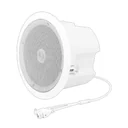 | IP-4-2K / IP-5-2K / IP-6-2K | IP ceiling loudspeaker range | Network ceiling loudspeakers for distributed IP audio. |
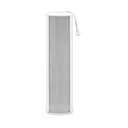 | T604 | Column loudspeaker | Column format for reverberant halls and longer throw distances. |
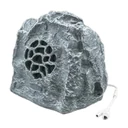 | IP-SN-A4 | Network landscape loudspeaker | Outdoor landscape loudspeaker for gardens, plazas and campuses. |
Representative models only. Key electrical, acoustic and certification values are confirmed in the model datasheet and the quotation.
Typical applications
Where this family is used
Schools & campuses
One bell, one paging system and one evacuation path across classrooms, corridors, playgrounds and canteens.
View application designMosques & prayer halls
Speech that reaches the prayer hall and the courtyard without echoes, feedback or late-night neighbour complaints.
View application design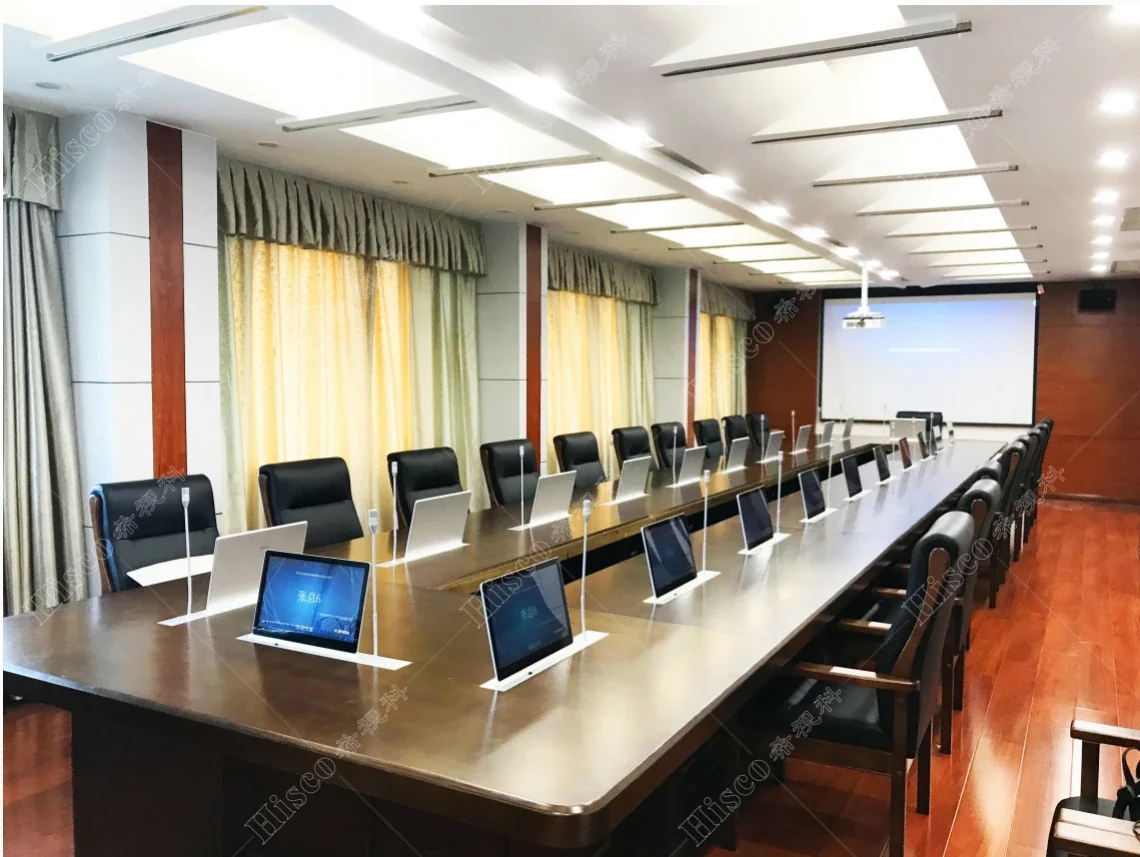
Hospitals & healthcare
Patient announcements, staff paging and evacuation in one system, with the privacy and zoning a hospital actually needs.
View application design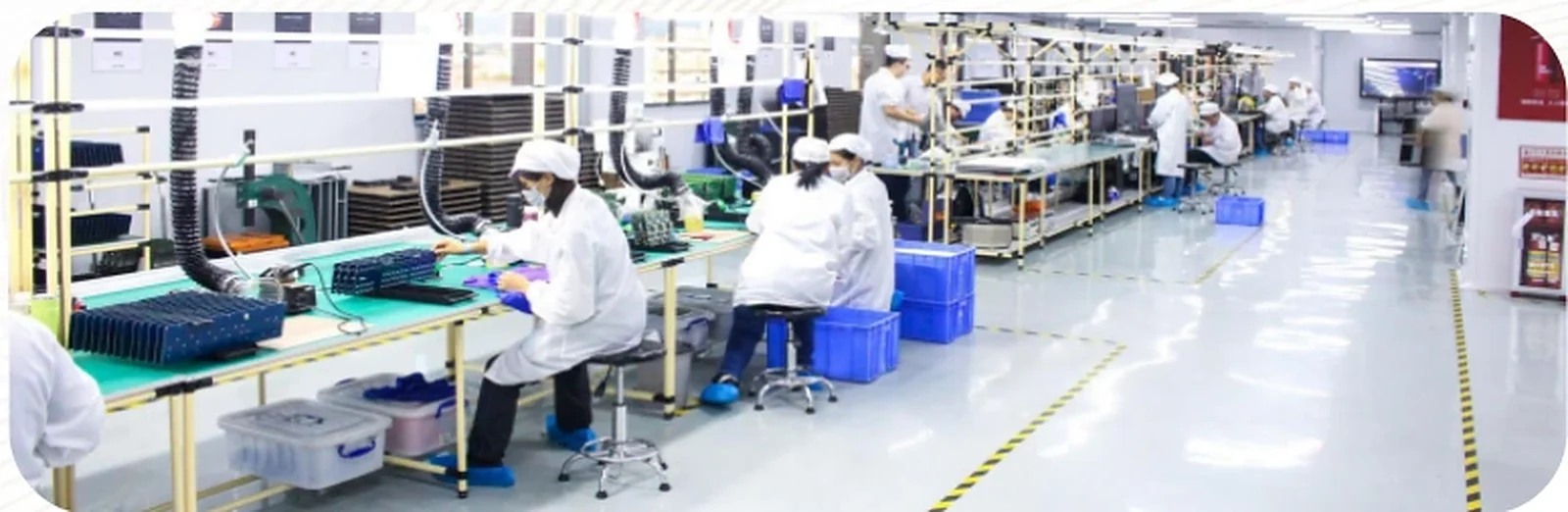
Factories & industrial sites
Announcements that cut through machinery noise, indoors and across the yard, without becoming a hazard.
View application design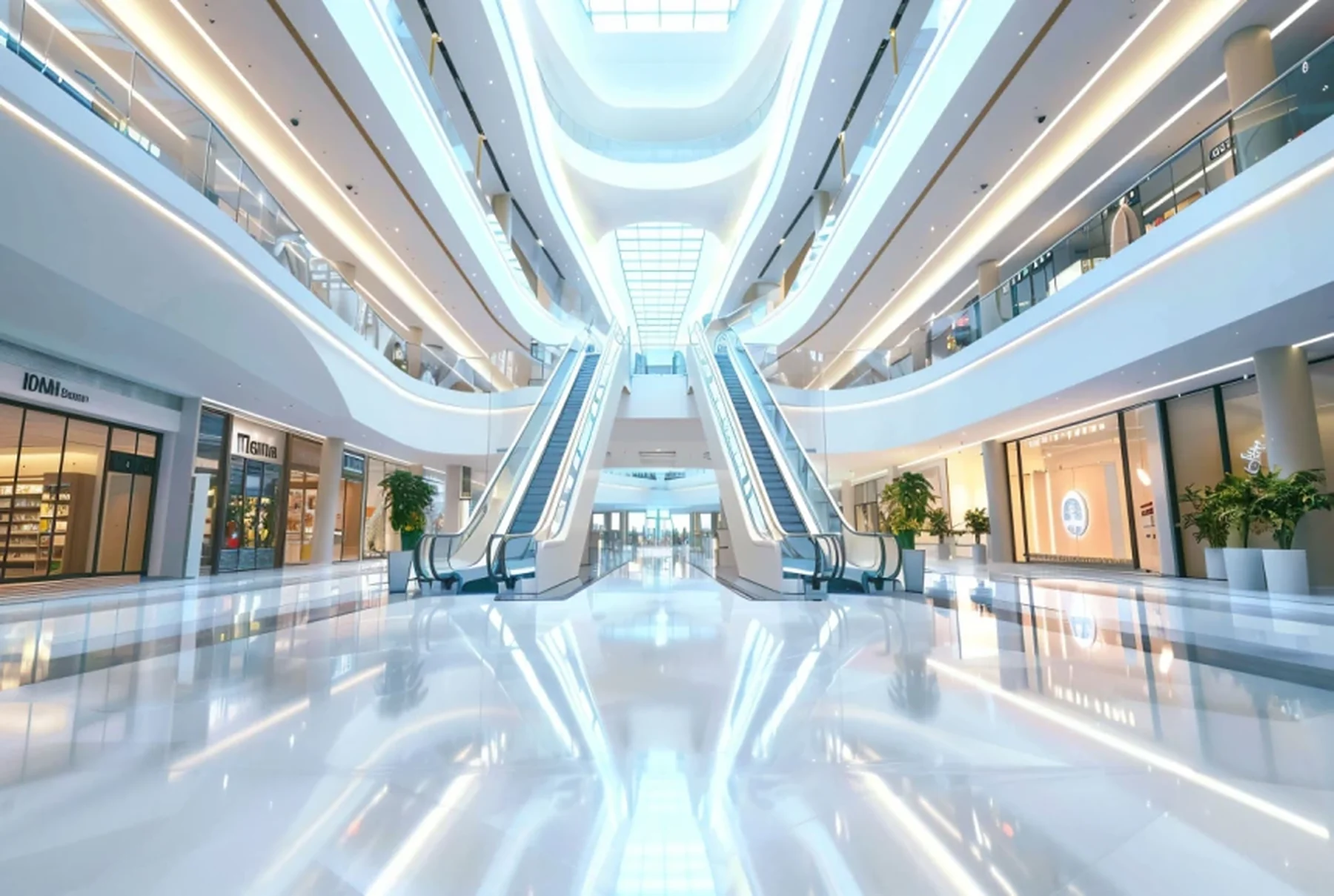
Airports, stations & transit
Long concourses, hard surfaces and constant background noise — announcements that stay intelligible at the farthest gate.
View application design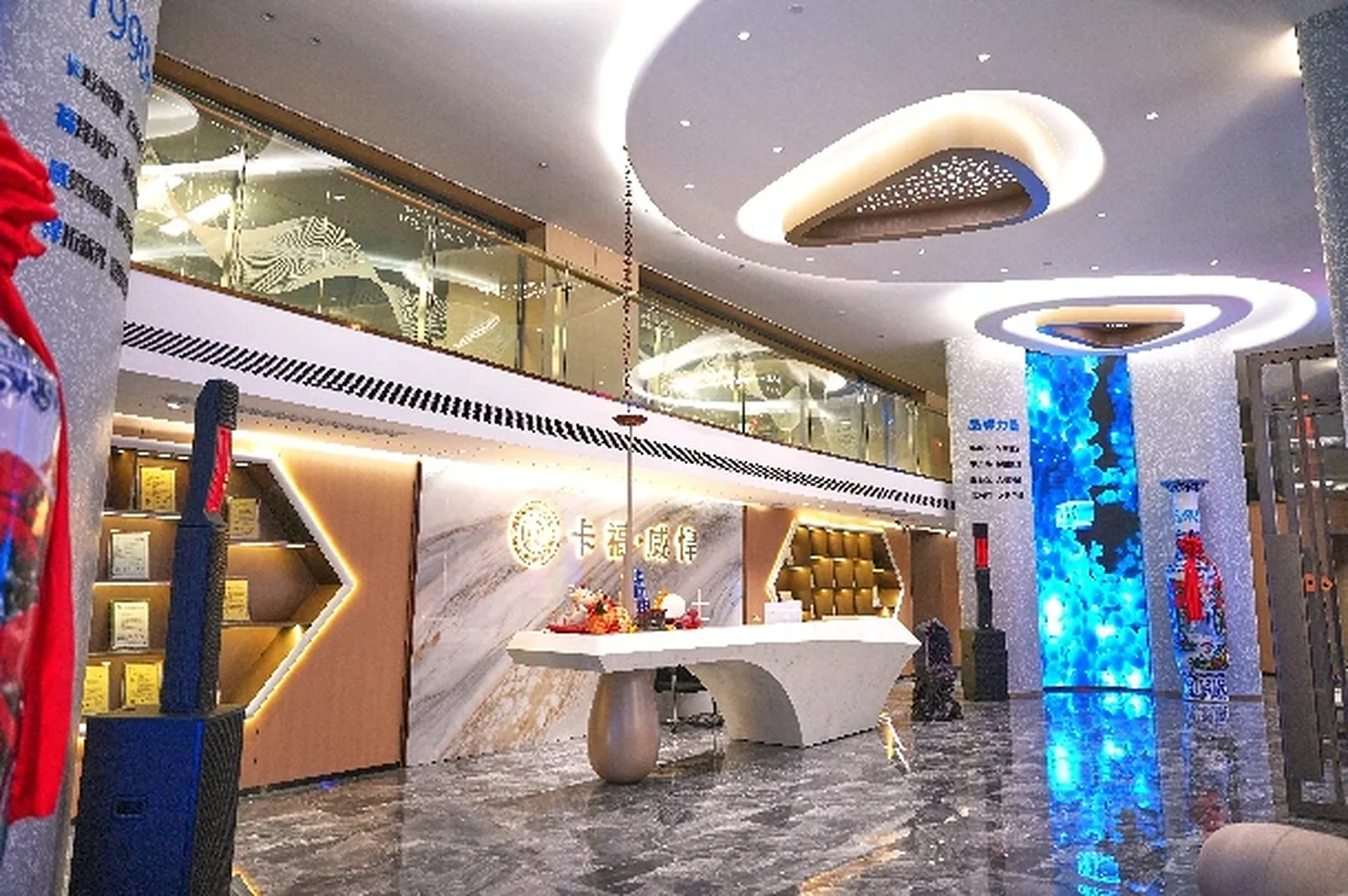
Offices & commercial buildings
Background music, floor paging and evacuation in a building that has to feel calm every day and work under pressure once.
View application design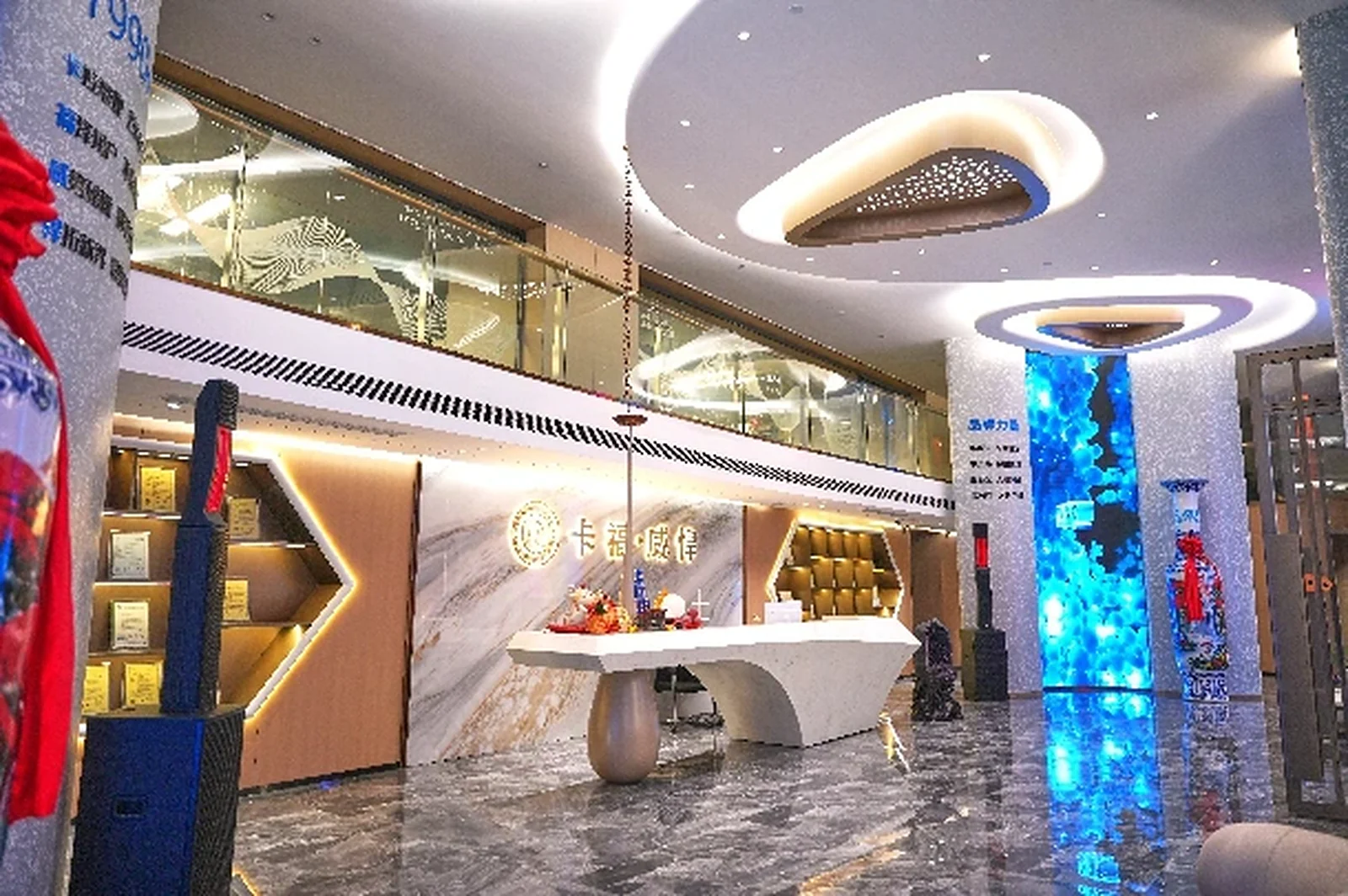
Hotel public areas
Lobby, restaurants, corridors, spa and pool — one background-music system with the ballroom and the fire alarm on speaking terms.
View application design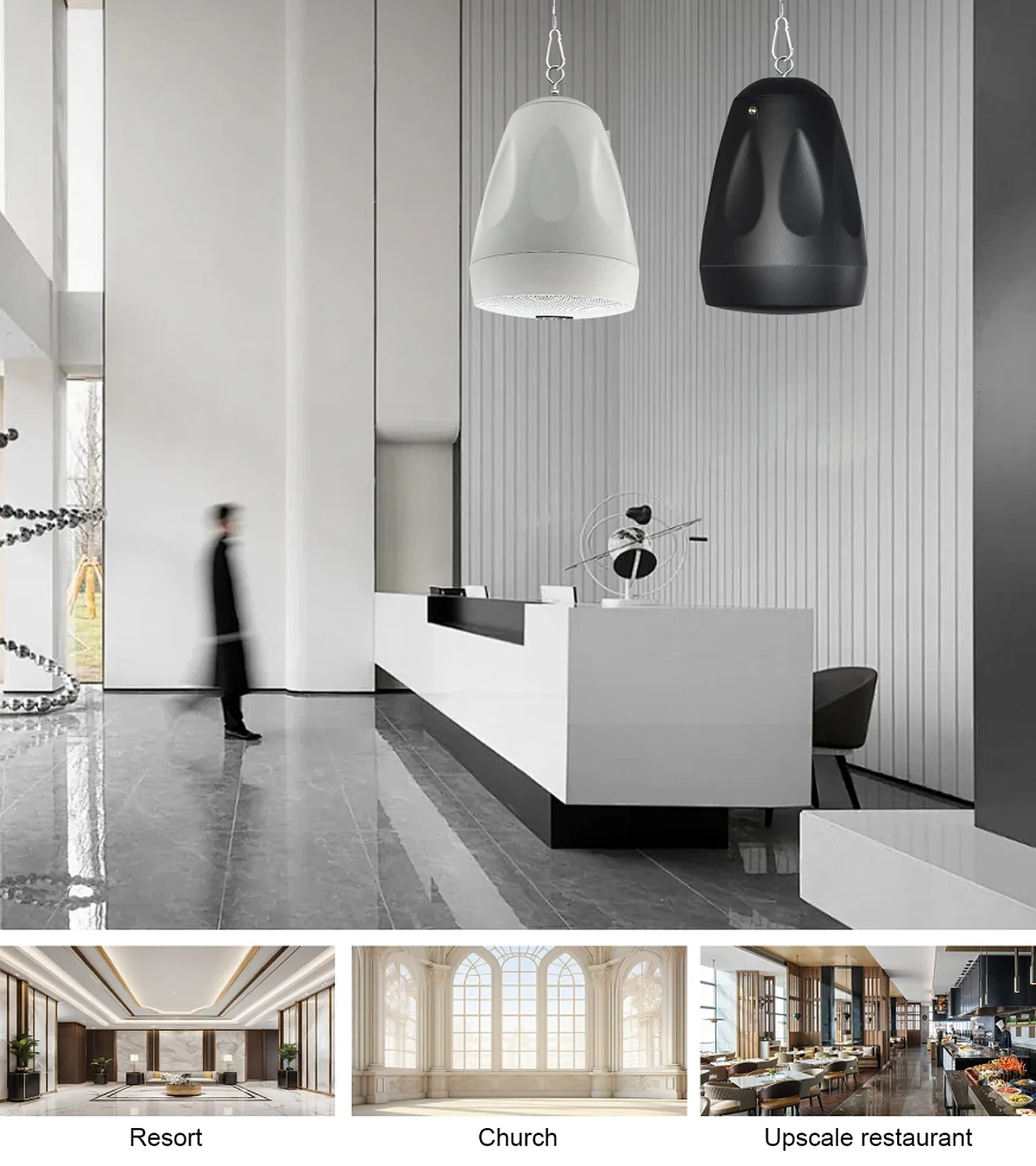
Existing building retrofit
New paging and evacuation in a building that cannot be opened up, closed down or filled with new cable.
View application designChurches & worship halls
Speech and music in a reverberant, often heritage, room — with the architecture respected.
View application designRelated
Build the rest of the chain
A working system is more than one family. These are the adjacent blocks that are usually specified together.
 PA line · core
Broadcast control & amplifiers
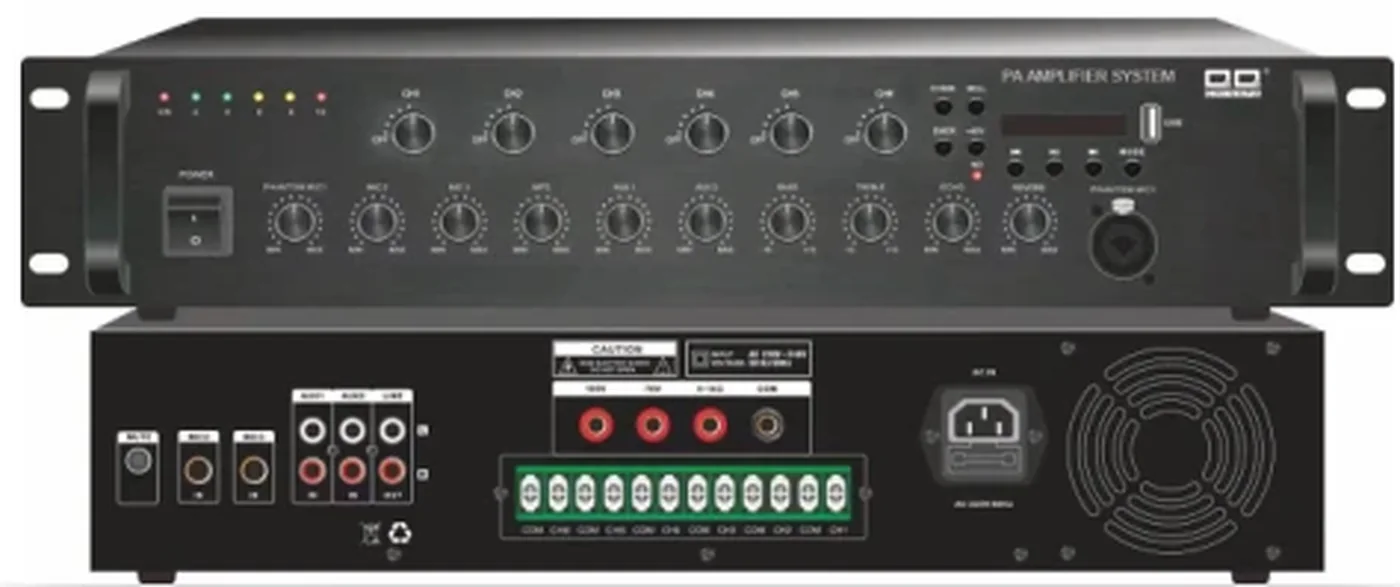
Broadcast hosts, zone controllers, mixer amplifiers and IP amplifiers for background music, paging and emergency override — specified as one signal chain.
 PA line · life safety
Voice alarm & fire interface
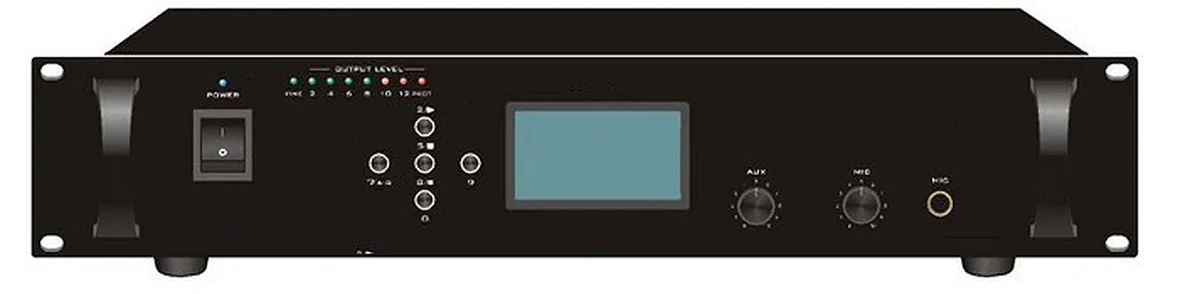
Voice-alarm control, evacuation messages, fire-alarm interfaces and monitored loudspeaker circuits — specified to the standard the project actually has to meet.
 PA line · control
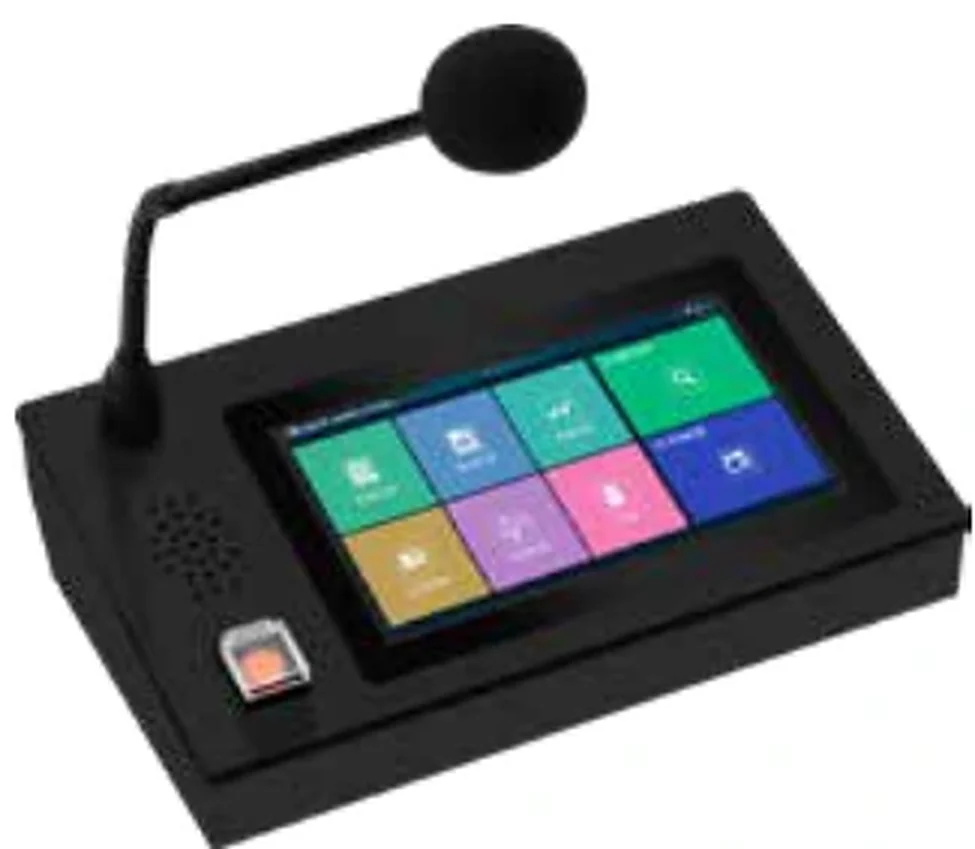
Zone paging & paging consoles
Desktop paging consoles, remote paging stations, zone selectors and timed message players for schools, hospitals, stations and commercial buildings.
 PA line · everyday
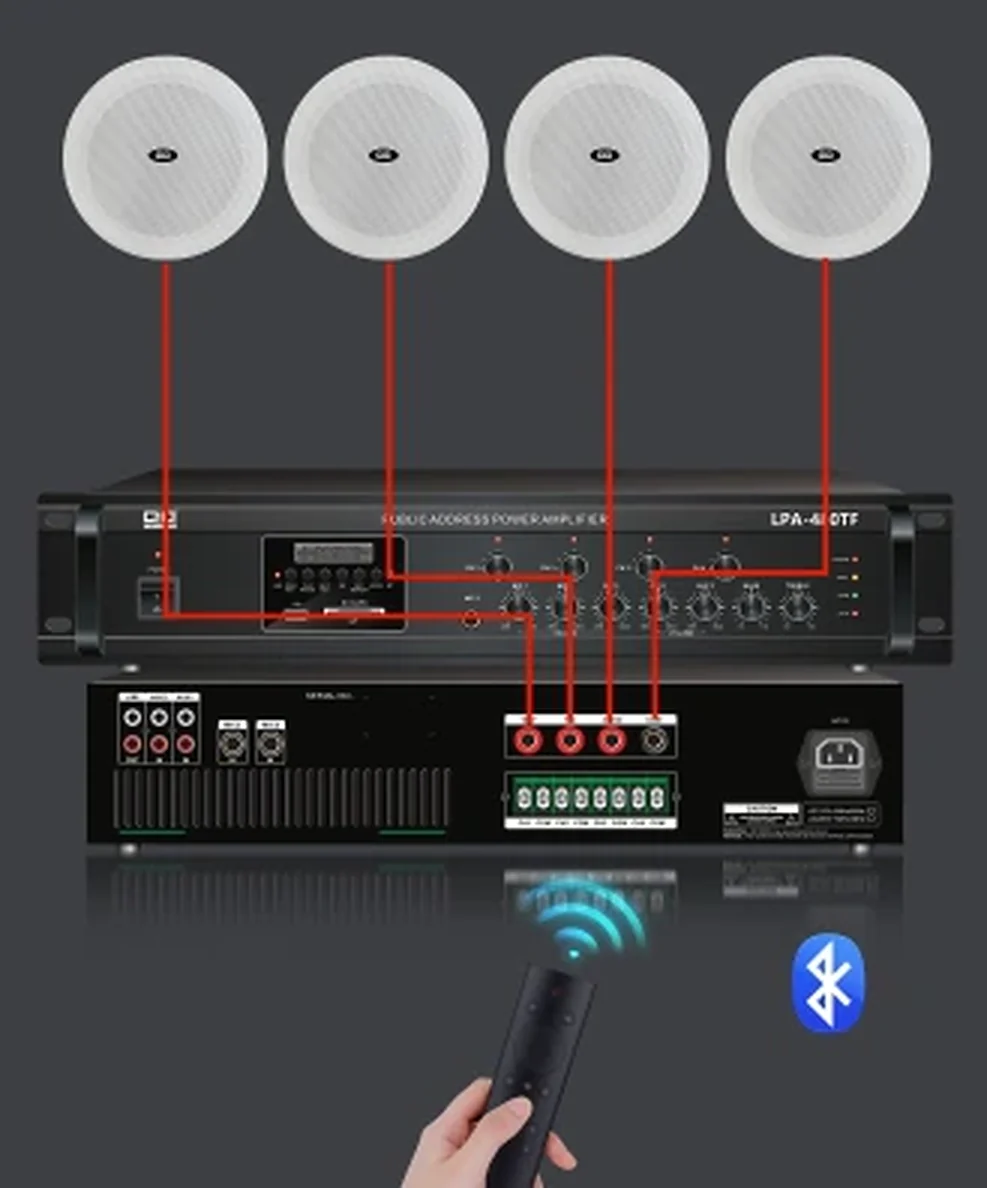
Background music systems
Music sources, players, zone volume control and loudspeaker selection for hotels, retail, restaurants, offices and public areas — with the paging and fire override designed in from the start.
Questions
Frequently asked questions
The questions that usually decide the scope: loudspeaker count, amplifier size, fire interface, certification and who installs the system. If your question is not here, send it with the building data.
Ask an application engineerHow far apart should ceiling loudspeakers be?
Start with the ceiling height and the loudspeaker coverage angle. A practical first pass is spacing = 2 × (ceiling height − listening height) × tan(coverage angle ÷ 2). Then check the result with an SPL calculation and the 15 m emergency-broadcast limit. A 3 m ceiling with a wide-coverage ceiling speaker typically lands around 4–6 m spacing, but the final figure is project-specific.
Do I need 3 W or 6 W ceiling speakers?
The tap is chosen from the required SPL at the listener and the number of loudspeakers on the circuit. 3 W is common in rooms and corridors; 6 W is common where the ceiling is higher or the ambient noise is greater. The same loudspeaker may be available in several taps; the design sets the tap, not the catalogue page.
Can I use the same loudspeakers for music and evacuation?
Often yes, but the design targets differ. Music needs even coverage and a comfortable spectral balance; evacuation needs intelligibility and a specified level above ambient noise. The loudspeaker has to satisfy both, and the fire strategy has to accept the shared use. Where the authority requires a dedicated voice-alarm system, the circuits are separated.
What is the 15 m rule?
It is a common public-address design rule: from any point in a fire compartment, the nearest loudspeaker should be no more than 15 m away, and the last loudspeaker in a corridor should be within 8 m of the corridor end. It is a maximum distance rule, not a guarantee of intelligibility. The SPL and speech-transmission calculation still has to be done.
Are outdoor loudspeakers included?
Yes, where the project needs them. Landscape, pole-mounted and IP-rated loudspeakers are available. The selection considers water ingress, UV, wind load, cable route and the mounting structure. The mounting structure itself is normally supplied by the local contractor.
Next step
Send the room, not the model
Tell us the building type, the zones, the ceiling height and the fire interface. We will check whether this family fits before we quote it, and show how it combines with the rest of the system in one proposal.
- Coverage and tap-load calculation
- Interface list for fire, paging and network
- Certificate scope confirmed per model
- ODM / OEM or private-label requirement
Project inquiry
Ask about Loudspeakers
Send the room or building data once. We return one combined proposal covering PA, conference, ballroom and AV, with the equipment schedule, interface list and the questions that still need an answer. ODM and OEM inquiries are welcome. Drawings are welcome but not required.