
Technical note · public address
Speaker spacing & SPL: check coverage before the quote
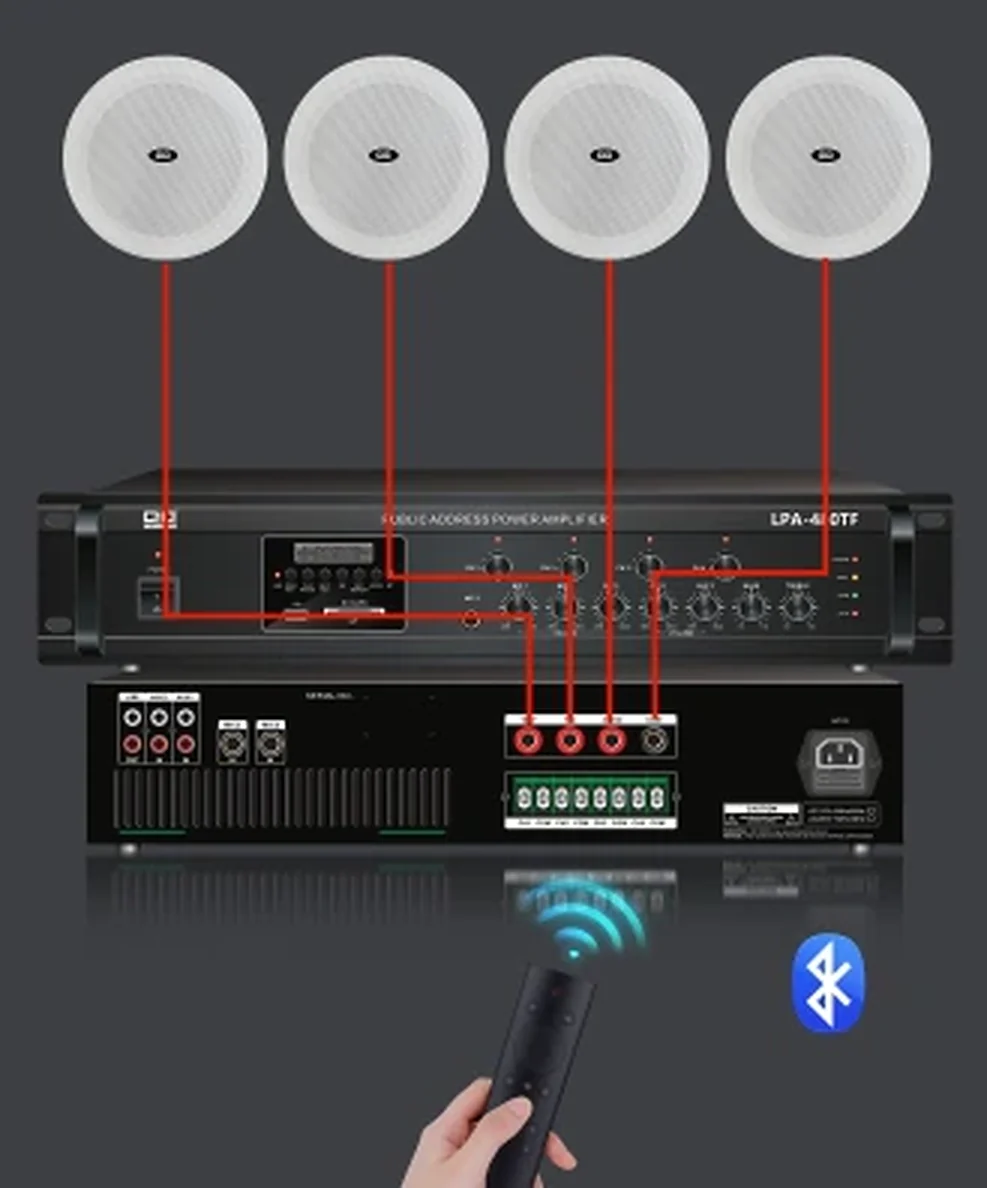
Speaker spacing is the number that decides how many loudspeakers a room needs. It is a geometry calculation, not a rule of thumb copied from another project.
This note explains the inputs, the two rules that are easy to check on site, and a worked example that can be repeated in a spreadsheet.
Why does spacing decide the speaker count?
A loudspeaker covers a cone of sound. The higher the ceiling and the narrower the coverage angle, the larger the spacing can be. The lower the ceiling, the closer the speakers must be.
The count follows the spacing: area divided by the coverage per speaker, plus the edge conditions. The tap setting then follows the required level.
How do ceiling height and coverage angle set spacing?
Use the finished ceiling height and the loudspeaker’s coverage angle to calculate the coverage diameter at the listener plane. Add the mounting height and the listener ear height to get the actual throw.
A speaker with a wide angle at a low ceiling gives a small coverage circle. A narrow-angle speaker at the same height covers less, but may be more intelligible in a reverberant room.
What are the 15 m and 8 m rules?
Two rules are easy to check without software: no listener more than 15 m from the nearest loudspeaker, and no more than 8 m from the last corridor loudspeaker to the corridor end.
These rules are a design check, not a complete acoustic model. They catch the common error of a corridor with a speaker at one end and a listener at the other.
How do SPL, distance and taps relate?
Sound pressure level falls with distance. A useful starting formula is SPL = SPL at 1 m − 20 log10(distance). The tap setting and the loudspeaker sensitivity give the SPL at 1 m.
Use the formula to compare tap settings, not to replace a measurement. The room, the surfaces and the background noise change the result.
How loud should the emergency message be?
The emergency message must be at least 15 dB above the ambient noise. Measure or estimate the noise in each zone, then set the tap and the amplifier level to reach the target.
A factory with 85 dB ambient noise needs a much higher level than an office. The loudspeaker and the tap must be selected for the noisiest condition, not the quietest.
What does a worked example look like?
Take a corridor 60 m long, 2.4 m wide and 3 m high, with a target of even speech coverage. The 8 m corridor rule sets the last speaker no more than 8 m from the end; the spacing along the corridor follows the coverage pattern.
Worked example
| Input | Value | Check |
|---|---|---|
| Corridor length | 60 m | Split into speaker spacing |
| Ceiling height | 3 m | Coverage diameter |
| Last speaker to end | ≤8 m | Corridor rule |
| Nearest listener | ≤15 m | General rule |
| Ambient noise | 55 dB | Emergency target 70 dB |
What are the common spacing mistakes?
The most common mistakes are counting speakers without checking the ceiling height, setting every tap to maximum, and ignoring the corridor end rule. Each one produces either poor intelligibility or an oversized amplifier.
- Using the floor area without the ceiling height.
- Copying the speaker count from a similar room with a different ceiling.
- Forgetting the last speaker at the corridor end.
- Setting the tap to maximum to compensate for a weak design.
What should you send for a quotation?
Send the room dimensions, ceiling height, room use, ambient noise and a plan with the speaker positions. Add the target SPL or the local code requirement.
We will return a spacing calculation, a speaker count and a tap-load estimate. The final model is confirmed against the room data.
Speaker spacing is a calculation with a small number of inputs: ceiling height, coverage angle, room boundaries and target level. Record the inputs before the speaker count is fixed.
Related products
Product families related to this note
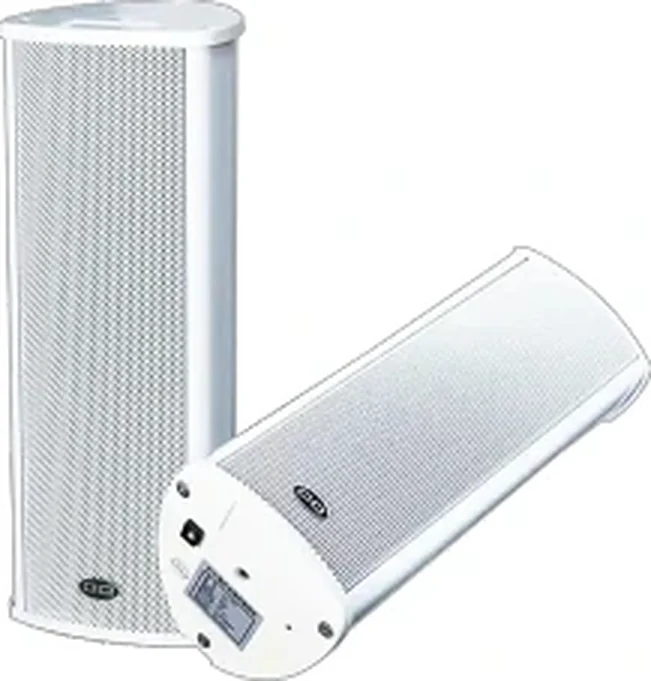 PA line · output
Ceiling, horn, column & wall loudspeakers
Ceiling, horn, column, wall and landscape loudspeakers for corridors, halls, factories, stations and outdoor areas — selected by coverage and environment, not by wattage alone.
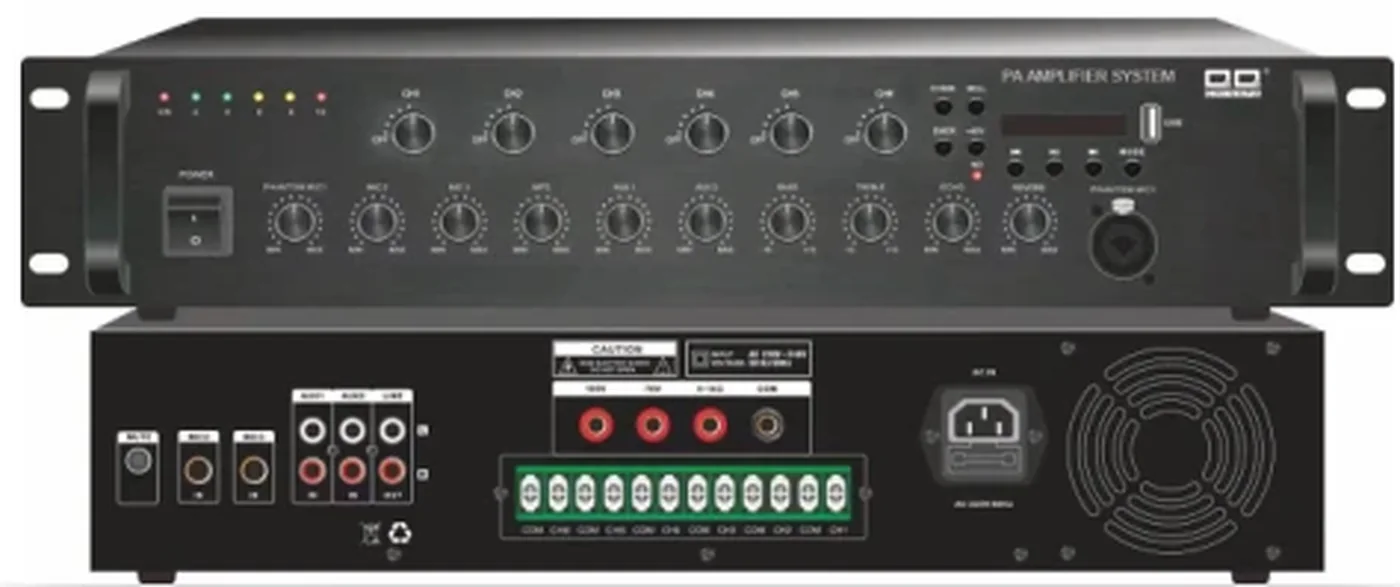 PA line · core
Broadcast control & amplifiers
Broadcast hosts, zone controllers, mixer amplifiers and IP amplifiers for background music, paging and emergency override — specified as one signal chain.
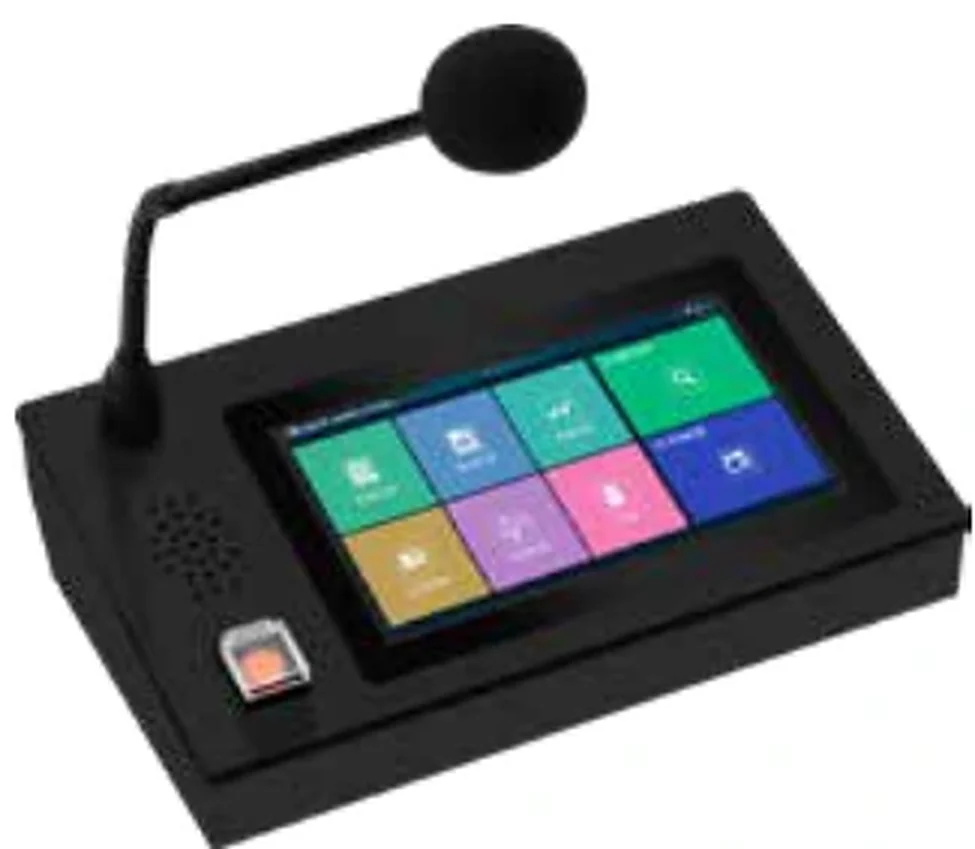 PA line · control
Zone paging & paging consoles
Desktop paging consoles, remote paging stations, zone selectors and timed message players for schools, hospitals, stations and commercial buildings.
Frequently asked questions
Frequently asked questions
How do I calculate speaker spacing?
What is the 15 m rule?
What is the 8 m corridor rule?
How do I calculate SPL at a distance?
How much above ambient noise should the emergency message be?
Can I use a spreadsheet instead of a calculator?
Related pages