
Technical note · public address
PA system design checklist: zones to amplifier size
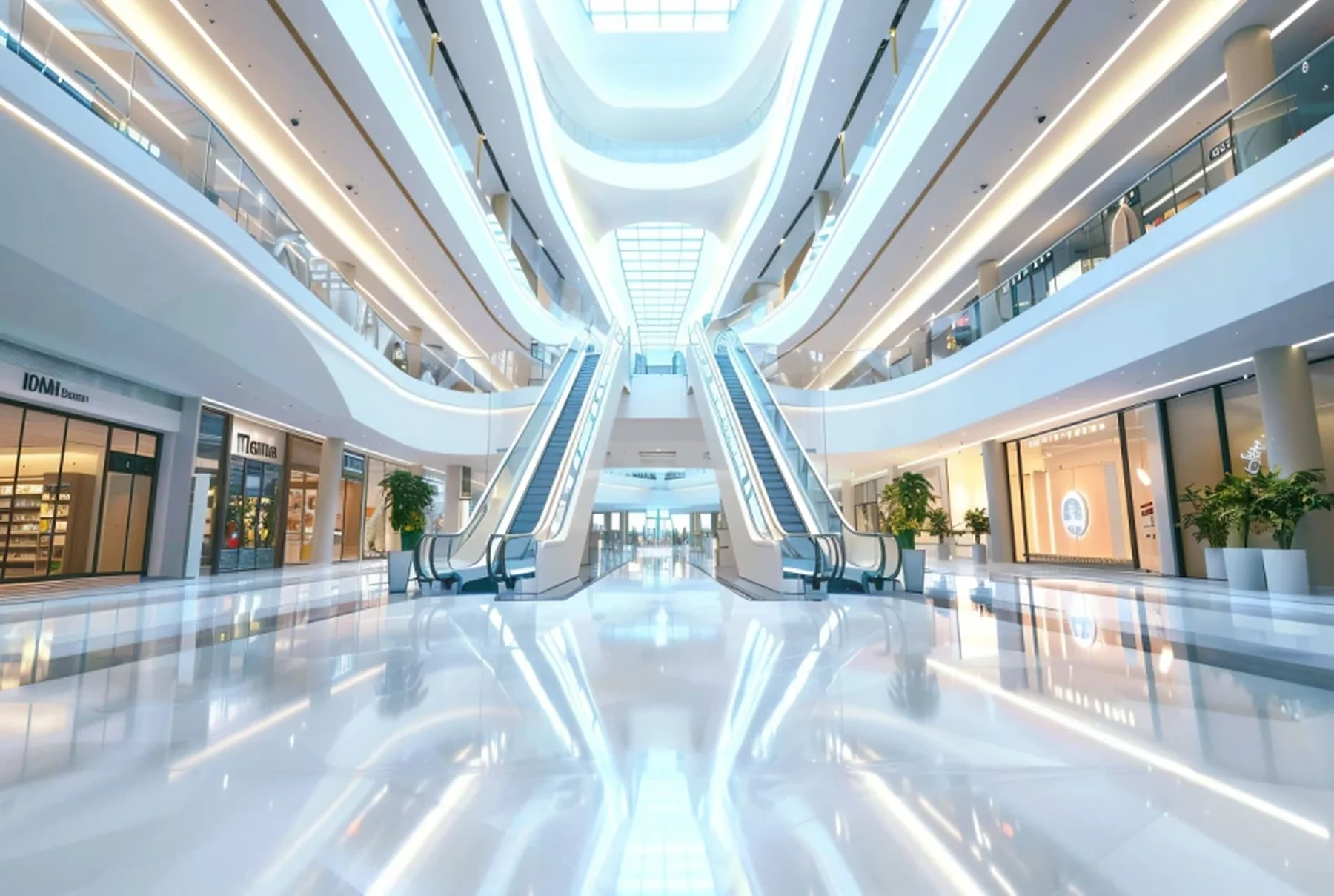
Most PA projects fail at the same three points: a zone list that does not match the building, a loudspeaker count that was never checked against the ceiling height, and an amplifier chosen from a catalogue rather than from the connected tap load.
The order below keeps those decisions in the right sequence. It is written for the project that has a floor plan and a fire strategy, not for a catalogue exercise.
How do you build the zone schedule?
A zone is an operating unit, not a room on the drawing. A classroom wing may be one zone, a corridor another, and the sports field a third. The fire strategy may split the same floor into different compartments.
Write the zone schedule first: area, use, fire compartment, paging source and whether the zone needs a local volume control. The head end, paging console and amplifier channels all follow this list.
- Separate zones for teaching, corridors, canteen and outdoor areas.
- A fire compartment is not automatically a paging zone, but the cause-and-effect must reconcile both.
- Record the normal and emergency level for each zone.
How do you check coverage before counting speakers?
Coverage is a geometry problem. Use the ceiling height, the loudspeaker coverage angle and the room boundaries to set the spacing. The two rules that are easiest to check are: no listener more than 15 m from the nearest loudspeaker, and no more than 8 m from the last corridor loudspeaker to the corridor end.
These are starting rules, not a substitute for the project survey. A high ceiling, a glass wall or a noisy factory floor changes the spacing and the tap setting.
Coverage checks
| Check | Starting rule | Confirm before order |
|---|---|---|
| Listener distance | ≤15 m to the nearest loudspeaker | Room geometry and partitions |
| Corridor end | ≤8 m from the last loudspeaker | Corridor length and door positions |
| Spacing | From ceiling height and coverage angle | Actual loudspeaker directivity |
| Emergency level | +15 dB above ambient noise | Measured or estimated noise |
The final spacing is confirmed with the selected loudspeaker and the room data.
How do you sum the tap load per circuit?
Each 100V loudspeaker has a tap setting in watts. The tap load is the sum of every loudspeaker on the circuit. This number, not the number of speakers, decides the amplifier size.
Split the circuits by zone and by cable route. A long corridor circuit with a high tap load may need a larger cable or a different circuit split. Record the tap setting for every speaker; a later change at the ceiling changes the load.
How much headroom does the amplifier need?
The amplifier must cover the connected tap load plus headroom for programme peaks and ageing. A common starting range is 1.25 to 1.5 times the connected load, but the final figure depends on the programme material and the standby policy.
For a 100V line, current equals amplifier power divided by 100 V. Check the voltage drop on long runs and the fuse or breaker for each output. A 500 W amplifier is not automatically the right answer for a 400 W load.
How should the fire interface be designed?
The fire interface is a hard-wired priority path, not a software setting. The fire alarm must override music and paging, and the evacuation message must reach the correct zones even if the network or the paging console is unavailable.
Agree the cause-and-effect matrix with the fire consultant. It should list every trigger, every zone and every loudspeaker circuit. Test the release door by door and zone by zone before handover.
How do you set the paging priority?
A school needs four priority levels: evacuation first, live paging second, scheduled bells third, background music last. A hotel may add a ballroom override and a back-of-house paging group.
Write the priority table into the operating procedure. If the staff cannot explain which source wins, the system will be used badly even if the equipment is correct.
What should be checked at commissioning?
Commissioning is not a listening test. It is a set of records: circuit impedance, SPL, priority, fire release and documentation. A lobby that sounds good is not proof that the back-of-house circuit works.
Commissioning record
| Test | Method | Record |
|---|---|---|
| Circuit impedance | Measure each 100V circuit | Reading per circuit |
| SPL | Measure at the listener in each zone | Target and measured value |
| Priority | Trigger paging over music, then fire over paging | Result and exceptions |
| Fire release | Test every trigger and zone | Cause-and-effect result |
| Handover | As-built schedule, preset and procedure | Document pack |
What should you send for a quotation?
Send the floor plan, the zone schedule, the ceiling heights, the room use and the fire strategy. If the building has an existing PA system, add the cable type and the amplifier model.
With those inputs we can return a zone schedule, a loudspeaker count, a tap-load calculation and a starting equipment list. Without them, a per-speaker price is only a budget.
A PA system is designed from the building outward: zones, coverage, tap load, amplifier, fire interface and commissioning. If the order is right, the equipment list becomes a consequence of the design rather than a guess.
Related products
Product families related to this note
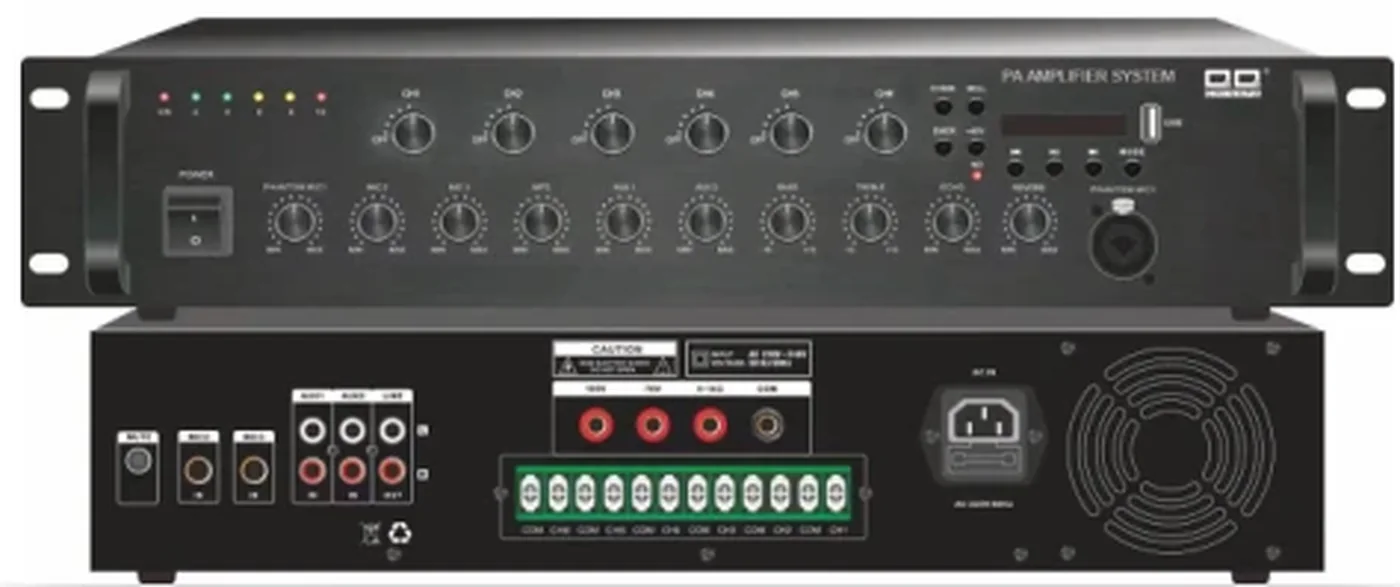 PA line · core
Broadcast control & amplifiers
Broadcast hosts, zone controllers, mixer amplifiers and IP amplifiers for background music, paging and emergency override — specified as one signal chain.
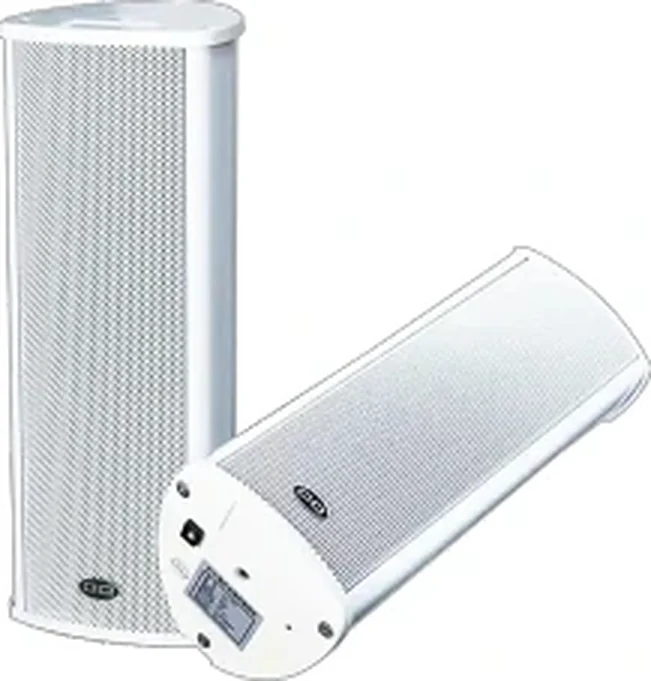 PA line · output
Ceiling, horn, column & wall loudspeakers
Ceiling, horn, column, wall and landscape loudspeakers for corridors, halls, factories, stations and outdoor areas — selected by coverage and environment, not by wattage alone.
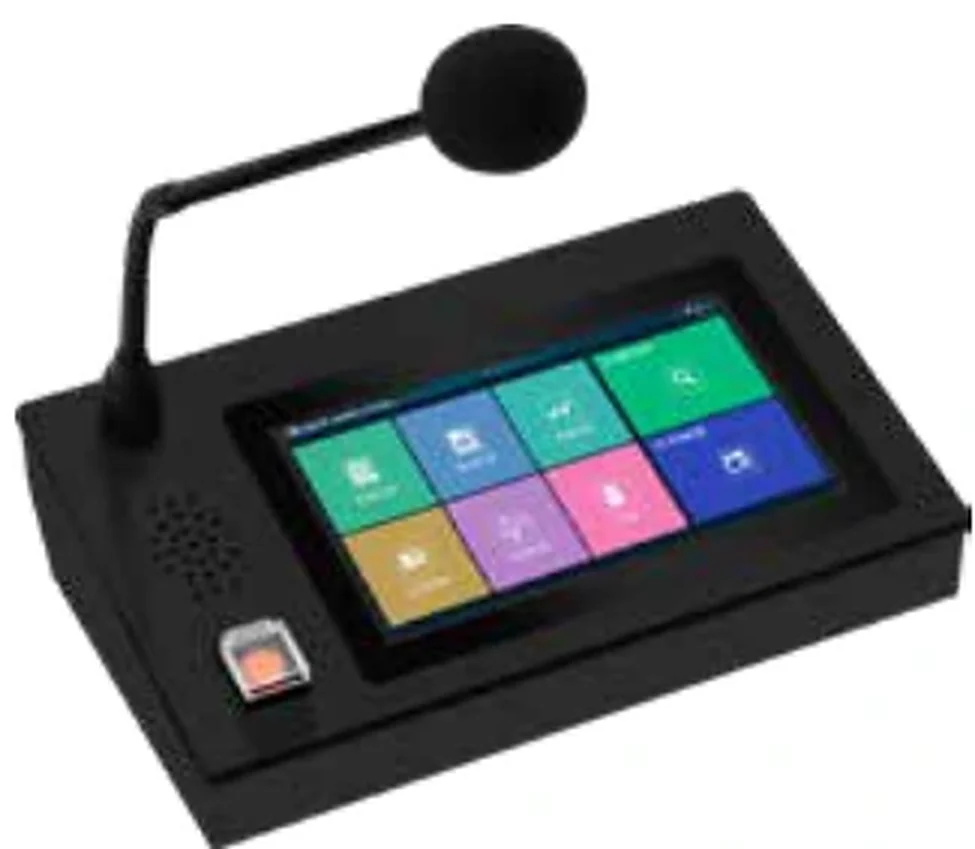 PA line · control
Zone paging & paging consoles
Desktop paging consoles, remote paging stations, zone selectors and timed message players for schools, hospitals, stations and commercial buildings.
Frequently asked questions
Frequently asked questions
How many loudspeakers do I need for a corridor?
What is tap load in a 100V PA system?
How much amplifier headroom should I add?
Can the fire alarm use the same loudspeakers as the background music?
What is the difference between a zone and a fire compartment?
What should a PA quotation include?
Related pages