
Technical note · public address
What is a PA system? Components, zones and selection

A PA system is the audio infrastructure of a building: it carries announcements, bells, background music and emergency messages to the people who need to hear them. It is not a single product; it is a chain of devices and a zone design.
This guide explains the components in the order they are selected, and the table at the end turns the explanation into a shortlist.
What does a PA system include?
A working PA system has a head end, a zone matrix, loudspeakers, a 100V distribution network, paging stations and a fire interface. The head end holds the sources and the priority logic; the zone matrix decides where the audio goes.
The loudspeakers are selected by space: ceiling for low rooms, horn for large or noisy spaces, column for reverberant rooms, wall and landscape for outdoor areas.
Components and responsibilities
| Component | Job | Selection input |
|---|---|---|
| Head end | Sources, priority and message storage | Zones, sources and fire strategy |
| Zone matrix | Route audio to the correct areas | Operating schedule and compartments |
| Loudspeakers | Deliver the level and intelligibility | Ceiling height, noise and room use |
| 100V line | Distribute power over long runs | Cable route and tap load |
| Paging | Live announcements by zone | Console type and staff workflow |
| Fire interface | Override for evacuation | Authority and cause-and-effect |
What do the head end and zone matrix do?
The head end is where the music source, the paging microphone and the fire alarm meet. It needs a priority table: fire first, live paging second, scheduled messages third, music last.
The zone matrix is not a volume knob. Each zone should have its own address, source and level. Zones can be grouped for all-call without losing individual control.
Which loudspeaker fits each space?
Ceiling loudspeakers suit low rooms with a grid layout. Horn loudspeakers suit large, noisy or outdoor areas where directionality and efficiency matter. Column loudspeakers suit corridors and reverberant rooms because they control vertical dispersion.
Wall-mounted and landscape loudspeakers are for specific positions, not a default. The choice is driven by the coverage pattern and the mounting condition.
How do the 100V line and tap load work?
The 100V constant-voltage line lets one amplifier drive many loudspeakers over long cable runs. Each loudspeaker has a tap setting; the sum of the taps is the connected load.
The amplifier is sized from the connected load plus headroom. Check the voltage drop and the fuse for each circuit. A long run with a high tap load may need a larger cable or a different circuit split.
How does the fire and voice alarm interface work?
A PA system that also carries evacuation messages needs a fire interface that overrides the music and paging. The interface must work without the network or the paging console.
Confirm the standard, the certificate scope and the accepting authority. A product that is “EN 54 ready” is not the same as a certified system.
How should paging and music priority be set?
Write the priority table and the operating procedure before the equipment order. Staff need to know which source wins and how to make an all-call.
A school may need a bell schedule and an exam lockout; a hotel may need a ballroom override and a back-of-house paging group. These are operating requirements, not product features.
How do you narrow the selection?
Use the table to narrow the system before comparing models. The first column is the building need; the second is the PA layer that carries it.
Need to system
| Need | PA layer | Check |
|---|---|---|
| Bells and announcements | Head end + ceiling/horn speakers | Zone schedule and priority |
| Background music | Music source + room speakers | Local volume and source routing |
| Live paging | Paging console + zone matrix | Console position and zones |
| Fire evacuation | Voice alarm + fire interface | Standard and certificate scope |
| Outdoor coverage | Horn/column speakers + 100V line | Weather rating and level |
What should you send for a quotation?
Send the floor plan, the zone list, the ceiling heights, the room use and the fire strategy. Add the existing amplifier or cabling if the project is a retrofit.
We will return a zone schedule, a loudspeaker count, a tap-load calculation and a starting equipment list. The final model is confirmed against the room data.
A PA system is a chain and a zone design. Start with the people who need to hear, then choose the head end, the loudspeakers and the interface that deliver it.
Related products
Product families related to this note
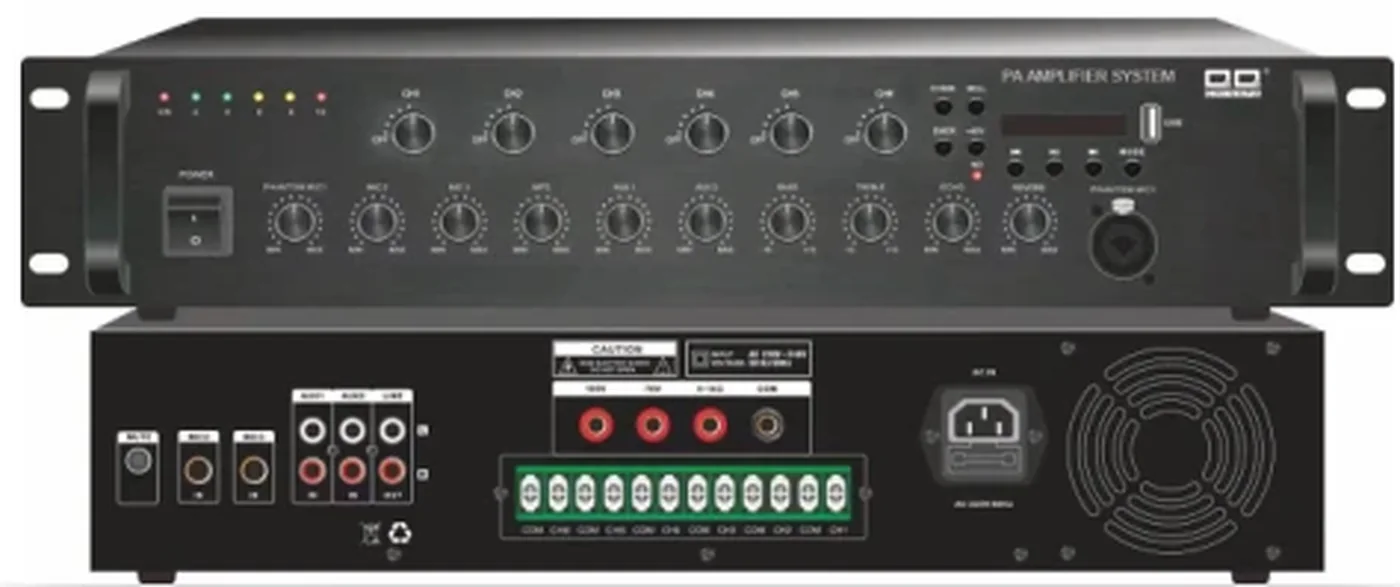 PA line · core
Broadcast control & amplifiers
Broadcast hosts, zone controllers, mixer amplifiers and IP amplifiers for background music, paging and emergency override — specified as one signal chain.
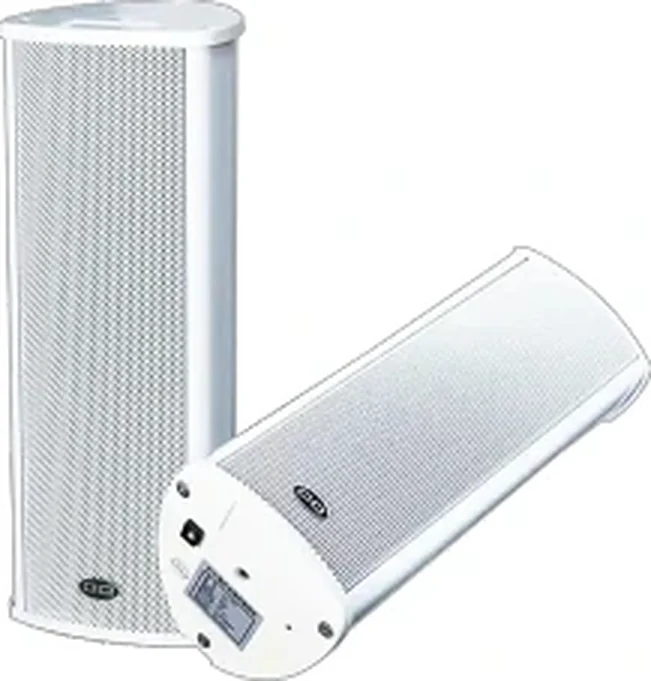 PA line · output
Ceiling, horn, column & wall loudspeakers
Ceiling, horn, column, wall and landscape loudspeakers for corridors, halls, factories, stations and outdoor areas — selected by coverage and environment, not by wattage alone.
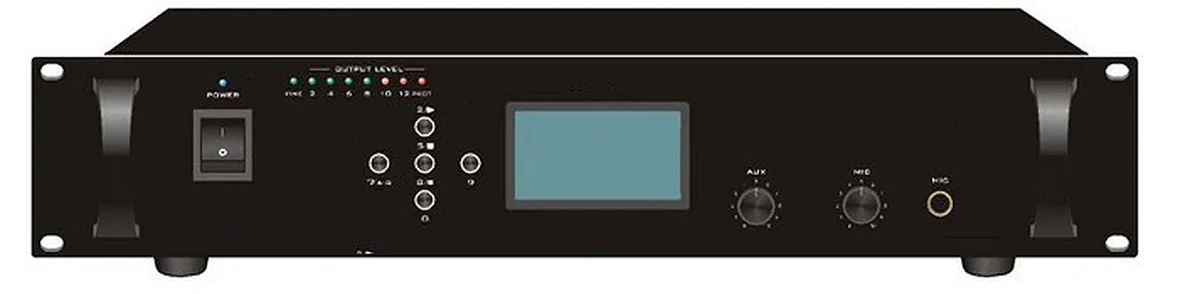 PA line · life safety
Voice alarm & fire interface
Voice-alarm control, evacuation messages, fire-alarm interfaces and monitored loudspeaker circuits — specified to the standard the project actually has to meet.
Frequently asked questions
Frequently asked questions
What is the difference between a PA system and a sound system?
What does 100V line mean?
Can a PA system play background music?
Do I need a separate fire alarm system?
How many zones does a building need?
What should a PA system quotation include?
Related pages