
Technical note · public address
Ceiling, horn or column speaker: which fits the space?
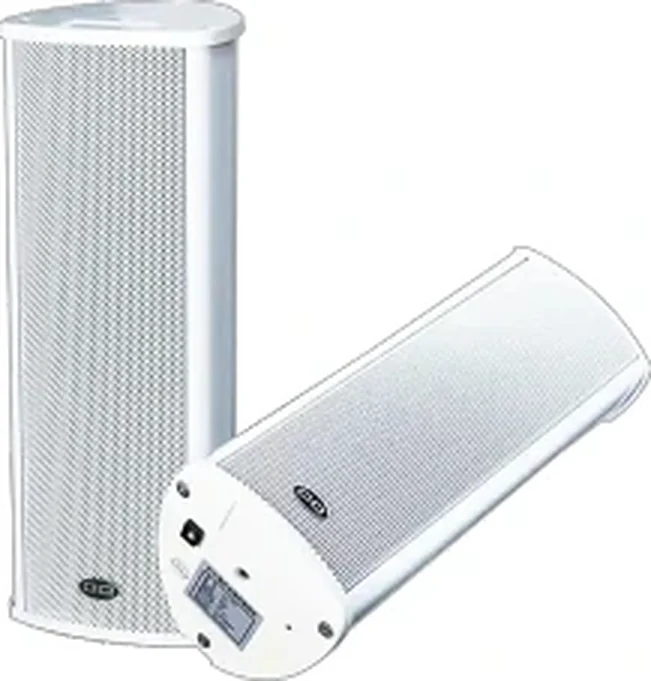
Loudspeakers are selected by space, not by brand. A ceiling speaker, a horn and a column solve different coverage problems. Using the wrong family makes the amplifier work harder and the listener hear less.
This note compares the five common families and the conditions that decide between them.
Which loudspeaker families cover which patterns?
A ceiling loudspeaker radiates downward in a cone. A horn is directional and efficient. A column controls vertical dispersion and throws sound along a corridor.
The coverage pattern, the mounting height and the room surfaces decide which one produces intelligible speech at the listener.
When should you use ceiling speakers?
Ceiling speakers suit low rooms with a flat, accessible ceiling: offices, classrooms, retail, corridors and hotel public areas. They are discreet and give even coverage when spaced correctly.
Check the ceiling void, the fire rating and the back can. A ceiling speaker in a fire-rated ceiling needs the correct assembly and fixing.
When should you use horn speakers?
Horn speakers are efficient and directional. They suit large, noisy or outdoor spaces: factory floors, warehouses, yards, platforms and sports fields.
The narrow pattern can be an advantage in a noisy room and a disadvantage in a wide area. Aim the horn at the listeners and check the level at the edges of the coverage.
When should you use column speakers?
A column loudspeaker controls vertical dispersion, which helps in reverberant rooms and long corridors. It keeps sound away from the ceiling and the floor and aims it at the listeners.
Columns are common in churches, halls, transport concourses and corridors. The mounting height and the tilt are part of the design.
When should you use wall or landscape speakers?
Wall-mounted speakers suit rooms where a ceiling is not available or where a specific area needs coverage. Landscape speakers suit gardens, plazas and outdoor hospitality areas.
Outdoor models need the correct IP rating, UV resistance and drainage. The mounting hardware is part of the selection, not an accessory.
How do tap settings and the 100V line work?
Each loudspeaker on a 100V line has a tap setting. A higher tap gives more level and more load. The tap must match the room noise and the amplifier capacity.
Do not set every speaker to the maximum tap by default. A corridor and a factory floor need different levels and different tap settings.
How do you narrow the selection?
Use the table to narrow the family before comparing models. The room condition is the first column because it decides the coverage pattern.
Space to speaker family
| Space | First choice | Why |
|---|---|---|
| Low office or classroom | Ceiling | Even downward coverage |
| Long corridor | Column or ceiling | Controlled vertical dispersion |
| Factory or warehouse | Horn | Efficiency and directionality |
| Church or hall | Column | Reverberation control |
| Outdoor plaza or garden | Landscape / horn | Weather rating and throw |
What should you send for a quotation?
Send the room type, ceiling height, dimensions, noise level and photos. Add the existing cable and amplifier if the project is a retrofit.
We will return a speaker family, a spacing concept and a tap-load estimate. The final model is confirmed against the room data.
The right loudspeaker is the one whose coverage pattern fits the space. Select the family first, then the model and the tap setting.
Related products
Product families related to this note
PA line · outputCeiling, horn, column & wall loudspeakers
Ceiling, horn, column, wall and landscape loudspeakers for corridors, halls, factories, stations and outdoor areas — selected by coverage and environment, not by wattage alone.
 PA line · core
Broadcast control & amplifiers
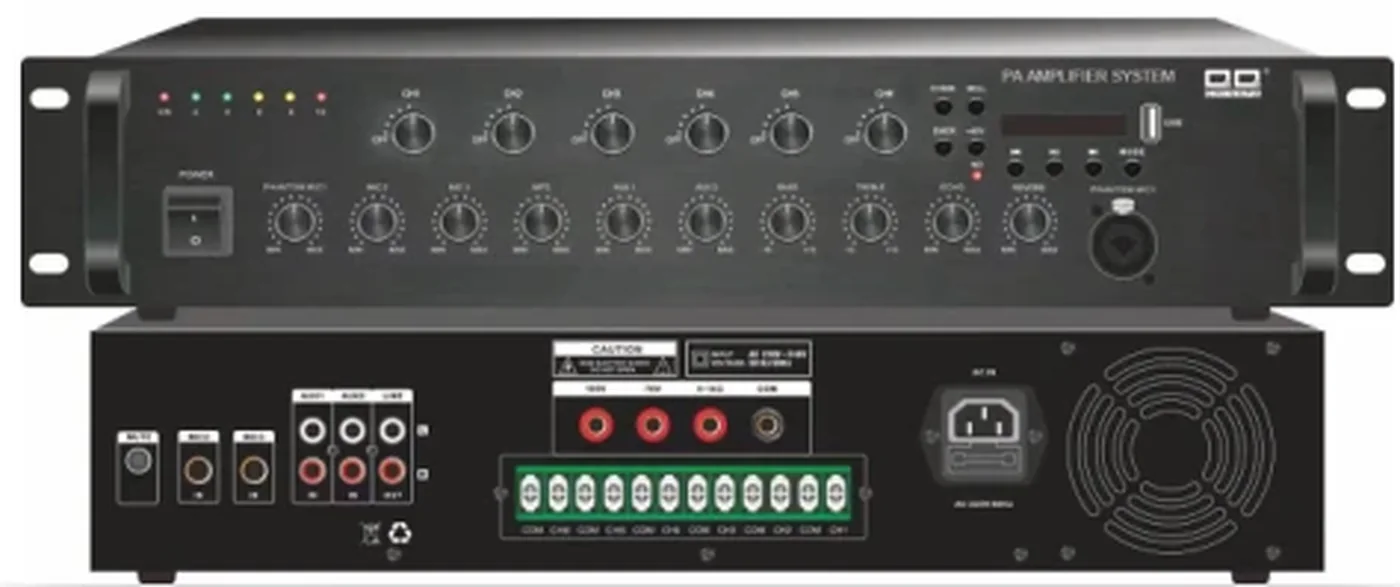
Broadcast hosts, zone controllers, mixer amplifiers and IP amplifiers for background music, paging and emergency override — specified as one signal chain.
 PA line · everyday
Background music systems
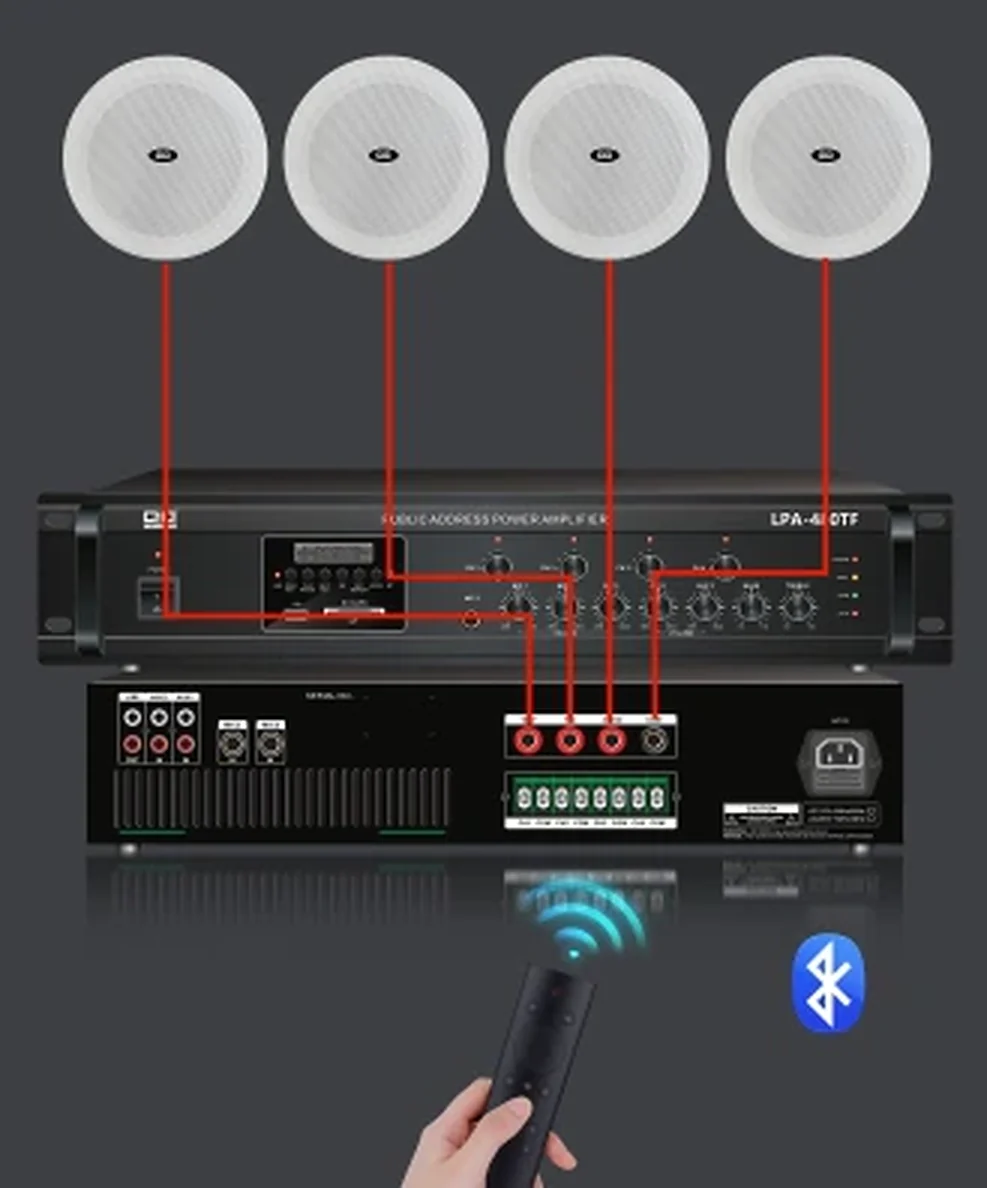
Music sources, players, zone volume control and loudspeaker selection for hotels, retail, restaurants, offices and public areas — with the paging and fire override designed in from the start.
Frequently asked questions
Frequently asked questions
Are ceiling speakers suitable for a factory?
What is a column speaker used for?
Do outdoor speakers need a special amplifier?
Can I mix ceiling and horn speakers on one system?
What is the best tap setting?
How do I choose between wall and ceiling speakers?
Related pages